Living in harmony with nature. Understanding her messages. Changing our remuneration systems.
Showing posts with label Energy. Show all posts
Showing posts with label Energy. Show all posts
Sunday, April 24, 2022


Thursday, June 8, 2017
Tuesday, January 31, 2017
"Welcome to the 'childhood dream age': let's embrace it". David Lipschitz's Letter in the Cape Times on 30th January 2017
So tonight (Thursday 26th January 2017) I attended a talk on our energy future.
The crowd was young. New people. New dreams. In a modern "co-working space".
And yet the discussion was the same as my generation have been having for the past 15 years.
Who will pay for nuclear energy? Why do we need it? Do we need the dinosaur industries that need base-load power? If we have a decentralized grid, how will the poor get their free electricity?
The same discussion. The same fears.
And yet whilst we myopic South Africans stay trapped in our insular world, people like Elon Musk, who escaped these confines, are inventing our future.
It is one of electric vehicles, massive storage systems, 80% fewer cars, no servicing requirements, no parking garages (a huge opportunity for the poor to move into the city centres), a massive reduction in the need for fossil-fueled power, self-driving cars, no need for petrol stations.
We are heading into a massive change over the next 15 years. Nothing can stop it. The tipping points are near.
And the opportunities are immense, not just for the rich. But also for the so-called "poor", who have an immense latent talent.
We are in an age that I call "the childhood dream age". Finally our children's dreams, and our dreams as children, can be realised.
It is a dream come true. If we fight it, we will lose. If we embrace it, we embrace a world where machines, not human machines, do the physical work, whilst the mental work gets done by super-brainy humans.
The Industrial Revolution's education system needs a complete overhaul. The answers are simple, but not easy to implement, mostly due to inertia, but also due to our habit of not listening to our children.
And every single human on this tiny planet is a super brain, a super computer, able to do more than the biggest most powerful machines that we can invent.
For millennia we have hidden in work and in war whilst ignoring the depression that seeps through our society. We finally are at an age where we can focus on ourselves, where everyone will finally be equal, and where opportunities will abound to "fix ourselves" and bring the Messianic Age that we have dreamt about for eons.
Will we continue with the same conversations we have had for as long as we can remember?
Will we continue to ignore the tide of change and bury ourselves in work, and in our fears?
Or will we be children again, inventing and being a part of a future that we have always dreamt about?
I look forward to our new conversations and to everyone being able to enjoy the abundance that we have on our planet, together.
David Lipschitz
Milnerton
The crowd was young. New people. New dreams. In a modern "co-working space".
And yet the discussion was the same as my generation have been having for the past 15 years.
Who will pay for nuclear energy? Why do we need it? Do we need the dinosaur industries that need base-load power? If we have a decentralized grid, how will the poor get their free electricity?
The same discussion. The same fears.
And yet whilst we myopic South Africans stay trapped in our insular world, people like Elon Musk, who escaped these confines, are inventing our future.
It is one of electric vehicles, massive storage systems, 80% fewer cars, no servicing requirements, no parking garages (a huge opportunity for the poor to move into the city centres), a massive reduction in the need for fossil-fueled power, self-driving cars, no need for petrol stations.
We are heading into a massive change over the next 15 years. Nothing can stop it. The tipping points are near.
And the opportunities are immense, not just for the rich. But also for the so-called "poor", who have an immense latent talent.
We are in an age that I call "the childhood dream age". Finally our children's dreams, and our dreams as children, can be realised.
It is a dream come true. If we fight it, we will lose. If we embrace it, we embrace a world where machines, not human machines, do the physical work, whilst the mental work gets done by super-brainy humans.
The Industrial Revolution's education system needs a complete overhaul. The answers are simple, but not easy to implement, mostly due to inertia, but also due to our habit of not listening to our children.
And every single human on this tiny planet is a super brain, a super computer, able to do more than the biggest most powerful machines that we can invent.
For millennia we have hidden in work and in war whilst ignoring the depression that seeps through our society. We finally are at an age where we can focus on ourselves, where everyone will finally be equal, and where opportunities will abound to "fix ourselves" and bring the Messianic Age that we have dreamt about for eons.
Will we continue with the same conversations we have had for as long as we can remember?
Will we continue to ignore the tide of change and bury ourselves in work, and in our fears?
Or will we be children again, inventing and being a part of a future that we have always dreamt about?
I look forward to our new conversations and to everyone being able to enjoy the abundance that we have on our planet, together.
David Lipschitz
Milnerton
Friday, November 6, 2015
Has our education system failed us and let to mass overconsumption and pollution?
The educational debate. Someone just asked me to comment on an article about bringing modern education to everyone on the planet via using the internet and home schooling, and this is my response.
Dear Hermann.
An excellent article and thank you for asking me to comment on it.
This article assumes that rural Africans and other Africans without adequate education (definition to be discussed) and also others in the world without access to our historical educational grids, should have access to the same kind of education that we had.
Recently I have been doing a lot of research in "Social Capital" in an African educational system. Last month, I spoke at a conference about this, and next week I am speaking about it at the SAEE (South African Energy Efficiency) conference in Joburg. (See http://mypowerstation-sa.blogspot.co.za/search?q=social+capital)
I don't believe that our earth can continue to sustain the kind of education that we have historically forced on our children. This has led to the mass consumption and pollution that we see today.
Instead, I see that cheap and reliable renewable energy + cheap and reliable internet bandwidth from anywhere on the planet + getting people to want to remain in their communities rather than migrate to the cities (because they can access the cities from their communities) + an educational alternative which encourages rural town development and rural wealth creation by using permaculture principles enhanced into bringing people into the internet and energy internet age, will solve our mass education problems. I see a return to city states, but enhanced to the point where everyone is "rich", ie has access to the kinds of amenities that we have today, ie fresh potable water, hot water, flushing toilets, energy efficient housing and buildings, readily available clothing and quality, organic, food, electricity, the internet, and educational resources that enhance their current lifestyles, rather than trying to make them like us.
In my opinion, our system is failing us, as it moves more and more resources to centrally controlled units (clouds), and instead of making us interdependent, is creating a culture of dependence which is getting worse and worse.
We need to test our assumptions and ensure that we want the best for other people, and not try to make other people like us.
Regards
David.
Dear Hermann.
An excellent article and thank you for asking me to comment on it.
This article assumes that rural Africans and other Africans without adequate education (definition to be discussed) and also others in the world without access to our historical educational grids, should have access to the same kind of education that we had.
Recently I have been doing a lot of research in "Social Capital" in an African educational system. Last month, I spoke at a conference about this, and next week I am speaking about it at the SAEE (South African Energy Efficiency) conference in Joburg. (See http://mypowerstation-sa.blogspot.co.za/search?q=social+capital)
I don't believe that our earth can continue to sustain the kind of education that we have historically forced on our children. This has led to the mass consumption and pollution that we see today.
Instead, I see that cheap and reliable renewable energy + cheap and reliable internet bandwidth from anywhere on the planet + getting people to want to remain in their communities rather than migrate to the cities (because they can access the cities from their communities) + an educational alternative which encourages rural town development and rural wealth creation by using permaculture principles enhanced into bringing people into the internet and energy internet age, will solve our mass education problems. I see a return to city states, but enhanced to the point where everyone is "rich", ie has access to the kinds of amenities that we have today, ie fresh potable water, hot water, flushing toilets, energy efficient housing and buildings, readily available clothing and quality, organic, food, electricity, the internet, and educational resources that enhance their current lifestyles, rather than trying to make them like us.
In my opinion, our system is failing us, as it moves more and more resources to centrally controlled units (clouds), and instead of making us interdependent, is creating a culture of dependence which is getting worse and worse.
We need to test our assumptions and ensure that we want the best for other people, and not try to make other people like us.
Regards
David.
Tuesday, October 20, 2015
Social Capital in an African Energy System
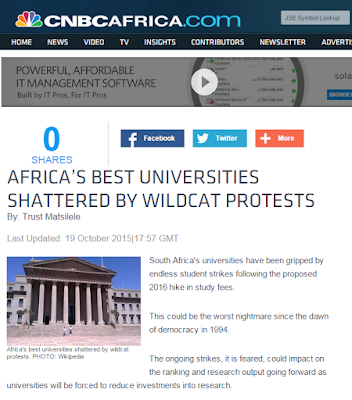
On Thursday 22nd, I am talking on "Social capital in an African renewable energy system" at the Sub Saharan Power Summit
Good timing due to the university student strikes going on at the moment.
I will be presenting an alternative paradigm where Africa can use its matric students and inherent African knowledge to solve its problems. We don't have enough university students in Africa to follow the European and rest of the world's economic paradigm.
How can we solve this problem?
You might also like to read: 2 billion jobs to disappear by 2030
What I am presenting discusses how we can solve this particular problem.
I don't expect success overnight as I have been discussing this in one form or another since 2009 and my wife and I have been practicing this concept since 1999 when I cancelled all my pension policies, and we decided to look after our own pension and our own interests, which paradoxically require us to work with quite a few other people.
Note my saying: "The rich are rich because they socialise. The poor socialists are poor because they don't socialise." What I'm saying is that the rich talk and share and work together, hence the main reason they are rich. All us poor and middle class people try to do everything ourselves, and we fail, generally.
See my RepairYourWorld BLOG for essays I have written since 2008. Search this page for "retire". Note one of the questions I ask: "Why does there need to be a cost of living?"
Perhaps this is scary for the big monopolies who want us to channel all our money via them. But if 2 billion jobs will disappear in the next 20 years, then the monopolies are out of date and we need a new (old) paradigm.
Thanks for all your ongoing support as I continue down this lonely path.
Monday, October 5, 2015
David's Homeowner Power Station Conference

So after seven years of preparation, my very first self-organised conference is Live and you can buy tickets.
"David's Homeowner Power Station Conference". With a twist. You decide its content. I make topic recommendations and I start the conference with a 40 minute keynote speech, titled, "Load Shedding and What we can do about it".
David's Homeowner Power Station Conference: preparing for a world without jobs.
We all have our own power stations. We have power. We have internal power which makes us who we are. And we can also generate power and save power. And energy. Hence "my power station". Say it aloud. "My Power Station". :) Feels good, doesn't it.
The conference is at the Belmont Square Conference Centre in Rondebosch, Cape Town, on the 28th November 2015. I'd like to thank the Belmont Square team for helping me to make this conference a reality and for their help and flexibility. And I'd like to thank the Webtickets team for helping me with the set up and for not complaining about the numerous changes that were needed as I learnt how their platform works.

We also have potential venues in Paarl and other parts of South Africa and if you'd prefer to attend elsewhere, in South Africa, Africa or anywhere, please let me know?
Registration is from 8am and the conference is from 9am to 5pm. Breakfast and lunch will be provided and teas, coffees, biscuits and fruit will be available all day.
There will also be special presents such as bags, USB sticks, and some special guests have asked to attend. Note that in order to cover our costs the bags and USB sticks will probably be sent to participants after the conference, but watch this space. Any sponsors are welcome.
The basic idea behind this conference is that I attend very many conferences and due to my knowledge in energy and my contribution to renewable energy in South Africa, I am given tickets to the conferences and I speak at many of them. Some of these conferences cost R7,500 per day.

I want to transfer this knowledge to homeowners and small business owners, who have limited time and limited resources. I am very good at taking complex, technical issues and explaining them in plain English. And I intend to help you along your path to developing your own power station and retiring sooner than expected.
I have chosen to make this conference especially for home owners and small business owners and to charge only R750 for the day. To cover the conference costs, pay myself, and make a small profit, so that I can organise the next conference(s), and so that I can devote more time to the Research and Development I do in Renewable Energy and Energy Storage (batteries).
Every participant will be able to ask one question. Some of the questions will be answered at the conference and all will be answered on my BLOG. We will have discussions at the conference and perhaps we will change ourselves, and maybe even South Africa and Africa, and who knows, maybe the world.
Early bird R550 for the day. Early bird available until 7th November.
After that the full R750 fee is applicable.
The early bird fee allows us to get everything up and running, pay deposits, get the handouts, make sure the food is provided, etc.
Including VAT and you get an invoice made out to you or your company. We are a PTY Ltd company and we are VAT registered and our company started in November 1994, so we have been around and we have credibility.
Buy Tickets at Webtickets or email me if you want to pay by internet transfer or if you need an invoice first.
Topics to follow.
Thanks to my brother Steve Freedom for the logo and photographic manipulation work.

Thursday, October 1, 2015
Letter in 30th September 2015 Tabletalk: "Tariff Upset"
The City of Cape Town over the past two years have chased away thousands of customers by removing them from the lifeline tariff and putting them on normal tariffs! in many cases more than doubling their electricity prices.
Most recently the City of Cape Town have told pensioners that if the house they rent is revalued to above R300,000 these renters must pay a higher electricity price!
In 2009 we installed a solar-electric system and qualified for the lifeline tariff, so we applied and got it. Our average units per month are around 300 kWh (units). Then in July 2014, we suddenly started getting bigger bills.
We had been unilaterally and without warning been moved to the "normal" tariff. Our bill increased from R2,857 in the year ended June 2014 to R6,467 in the year ended June 2015. Our units increased from 3,328 kWh to 3,851 kWh in the same period. So our tariff (rate per kWh) increased from 86 cents per kWh to R1.68, a 95% increase in one year!
Out of interest, the reason for the increase in kWh usage was because our geyser started using excess electricity and we had it replaced under guarantee in August 2015. Something went wrong with its insulation. We found this out because we measure our geyser and household electricity usage ourselves, and because we started having brown water from time to time.
What the City should be doing is putting everyone on the lifeline tariff who use less than 600 kWh per month, perhaps only giving free kWh to those who earn less than a certain amount. Reason? As an incentive to use less.
A person who is renting should not be penalised by a homeowner who has their house revalued, for example to get at capital in the house.
In this case, the homeowner should pay the extra electricity cost!
In the case where a house is revalued by the City, the homeowner should apply for a revision back to the purchase price of the property.
Just because houses of a similar size in a particular area are considered to have a particular value by the city and estate agents does not mean that your house has the same value.
One of the oldest problems in South Africa is the discrepancy between rates and utility costs; something our new government has overlooked, even as it tries to right the wrongs of the past.
In the early 1900's, the landowners decided that the utility costs should be high whilst the rates should be low. Landowners can own huge tracts of land without paying properly for this area's maintenance, whilst the renter has to pay relatively high utility prices.
This secret can be found in Professor Renfrew Christie's book "Electricity, Industry and Class in South Africa". The book is available online at https://play.google.com/books/reader?id=n3WjRrnNqCUC... Professor Christie published the book in 1984, whilst a political prisoner at the time.
Of-course someone living in their own home is not penalised. Their rates are higher whilst their utility costs are lower and overall their costs are the same.
The benefit of higher rates is that these are local to each city and municipality and can therefore be more equitably shared where they are raised.
VAT is also saved by the homeowner as their utility bills will be lower and VAT is paid on utility bills. Of-course big landowners are VAT registered and don't pay VAT.
Imagine the City saying come live in Cape Town where, if you use less than 600 kWh per month you benefit by paying less for electricity.
This benefits homeowners and business owners, and will create thousands of jobs in the blue economy.
And Capetonians will also get all the other benefits, like better housing, no toll roads, better security, more jobs, more electricity security and etc.
Most recently the City of Cape Town have told pensioners that if the house they rent is revalued to above R300,000 these renters must pay a higher electricity price!
In 2009 we installed a solar-electric system and qualified for the lifeline tariff, so we applied and got it. Our average units per month are around 300 kWh (units). Then in July 2014, we suddenly started getting bigger bills.
We had been unilaterally and without warning been moved to the "normal" tariff. Our bill increased from R2,857 in the year ended June 2014 to R6,467 in the year ended June 2015. Our units increased from 3,328 kWh to 3,851 kWh in the same period. So our tariff (rate per kWh) increased from 86 cents per kWh to R1.68, a 95% increase in one year!
Out of interest, the reason for the increase in kWh usage was because our geyser started using excess electricity and we had it replaced under guarantee in August 2015. Something went wrong with its insulation. We found this out because we measure our geyser and household electricity usage ourselves, and because we started having brown water from time to time.
What the City should be doing is putting everyone on the lifeline tariff who use less than 600 kWh per month, perhaps only giving free kWh to those who earn less than a certain amount. Reason? As an incentive to use less.
A person who is renting should not be penalised by a homeowner who has their house revalued, for example to get at capital in the house.
In this case, the homeowner should pay the extra electricity cost!
In the case where a house is revalued by the City, the homeowner should apply for a revision back to the purchase price of the property.
Just because houses of a similar size in a particular area are considered to have a particular value by the city and estate agents does not mean that your house has the same value.
One of the oldest problems in South Africa is the discrepancy between rates and utility costs; something our new government has overlooked, even as it tries to right the wrongs of the past.
In the early 1900's, the landowners decided that the utility costs should be high whilst the rates should be low. Landowners can own huge tracts of land without paying properly for this area's maintenance, whilst the renter has to pay relatively high utility prices.
This secret can be found in Professor Renfrew Christie's book "Electricity, Industry and Class in South Africa". The book is available online at https://play.google.com/books/reader?id=n3WjRrnNqCUC... Professor Christie published the book in 1984, whilst a political prisoner at the time.
Of-course someone living in their own home is not penalised. Their rates are higher whilst their utility costs are lower and overall their costs are the same.
The benefit of higher rates is that these are local to each city and municipality and can therefore be more equitably shared where they are raised.
VAT is also saved by the homeowner as their utility bills will be lower and VAT is paid on utility bills. Of-course big landowners are VAT registered and don't pay VAT.
Imagine the City saying come live in Cape Town where, if you use less than 600 kWh per month you benefit by paying less for electricity.
This benefits homeowners and business owners, and will create thousands of jobs in the blue economy.
And Capetonians will also get all the other benefits, like better housing, no toll roads, better security, more jobs, more electricity security and etc.
Thursday, September 10, 2015
Why Uber is important for South Africa

The photo above is from the Uber web site. I hope they don't mind me using it.
Uber is a serious part of my future plans, if I am to do as our government and local government would have us do, and use public transport. I am not a shareholder, just a thinker, and I want the best for South Africa and its people.
You see, in order to use public transport, I need choice. This means there must be competition, for example the IRT (Integrated Rapid Transit system), buses, trains, taxis, Uber, planes, other transport services, etc.
Transportation is incredibly expensive in South Africa. Worse than this, it is erratic, slow, and cable thefts, vandalism and poor maintenance means that one's staff are often late for work, stressed out, and not in the mood to work, when they get to work.
Trains, taxis, buses, etc, are all already regulated, yet, as can be seen, this legislation is unenforceable and in any case, most of the operators simply ignore it! Worse than this, public transport and minibus taxi services often cease at between 6.30pm and 7.30pm, which means that poor people cannot enjoy nightlife in Cape Town, cannot go to the concerts, and our students cannot work late at university and then get reliable transport home.
Trains, taxis, buses, etc, are all already regulated, yet, as can be seen, this legislation is unenforceable and in any case, most of the operators simply ignore it! Worse than this, public transport and minibus taxi services often cease at between 6.30pm and 7.30pm, which means that poor people cannot enjoy nightlife in Cape Town, cannot go to the concerts, and our students cannot work late at university and then get reliable transport home.
When I was at university, I was often there till 11pm and sometimes even till 3am. Doing projects. Using the computer lab. Having fun. And fortunately I had a motorbike, so I could go home, have some breakfast and then be back in time for lectures. South Africa has a dire shortage of students and degreed students, and part of this is because the transport services have forgotten about them.
Enter Uber. The potentially low cost transport option for the masses, without the burden of public transportation hampering the public purse! Uber, especially designed for developing countries.
Uber brings the first mass transport, reliable, self-regulated, and low cost transport service to South Africa.
And its vehicles can carry one passenger, if the passenger doesn't want to share, or many passengers, if they do want to share. Finally, another way of reducing South Africa's high pollution and reducing the need for foreign oil, especially with a depressed currency.
And of-course, if someone wanted to, they could easily compete with Uber!!
Uber's next foray is called UberShare, where one car is used to transport many people, like a bus, but way more versatile. When I was in Israel in 1984, there were Mercedes Limos with 3 rows, called Sheruts. These Limos could transport us students, travelling on a meagre budget around, pretty much from exactly where one was to where one wanted to be. I guess they were the forerunners of our mini-bus taxis, except to say that it felt wonderful to be in a Mercedes Limo, rather than a rattly old minibus, or even in a rattly and draughty bus.
Jeremy Rifkin, in his ground breaking book, "The Zero Marginal Cost Society", discusses Uber as one of the many services that operates almost for "free", where its costs decrease every year rather than go up. We have already seen this in free internet access, free phone calls, free movie tickets. And millennials want access rather than ownership, and the Uber service fits this new paradigm.
Although the government believe that Uber and similar services need to be regulated (by government), these services will in fact be self-regulated by social media. Imagine an Uber user who gets in a car with tomato sauce on the back seat, or a driver who smokes, or a driver, who might have been a former minibus driver, who ignores the road rules? These cars will very quickly be virused, i.e. social media will go viral on both good service and bad service, and good service will win. And at no cost to our government in terms of fines, more expensive to maintain regulations and more courts to get people to obey the law. As it is, many people simply ignore their fines and if they are summonsed, even ignore the summonses. Our jails are full and overflowing.
Self-regulation is key to our future. Millennials and social media will see to it!
I would very much like to give up my car, but I cannot because the existing services are too far away or are too expensive. What I would like to do is be able to call Uber and ask them to take me to my local IRT station. And when I get back home at 8pm after a long day, I'd like an Uber driver to meet me at my local IRT station and bring me home. Or I'd simply like to be able to use Uber for the trip, if I am not going on an IRT route.
Our local taxis are way too expensive for this and they don't like doing short routes. And they have regulated themselves into not being able to operate on "any" route, but must stick to their agreed routes, pretty much like the bus system. The system works like in many systems in spokes from the Centre, but if I want to go from "Zone 6" to "Zone 6" in another part of town, I can't go there directly by public transport. I have to go via Zone 1.
Hey App Writers: how about a "lift-club app?"
Hey App Writers: how about a "lift-club app?"
Or I'd like to walk up the road to a major thoroughfare like Koeberg Road, and simply get an Uber "sherut." I can't rely on minibus taxis to drive properly or to maintain their vehicles, and I can't rely on "regulations" because of no enforcement. And even if I was on a minibus taxi, I might find myself in the middle of a war zone, as two taxi associations fight it out with guns and knives for turf, as has happened in Westlake, Cape Town, causing me to take 2 hours for a half hour journey. They are doing themselves out of jobs in their rush to be "first."
Competition is incredibly important in an environment where one wants to give up one's car.
I need the IRT. I need the railways. I need the taxi services. I need services like Uber. I don't want to take the mini bus taxis because they typically drive badly and ignore the rules of the road. If Uber, and other similar services, usurp them, and they usurp an unreliable and expensive bus and train service, then these service providers only have themselves to blame!
Friday, August 28, 2015
Energy Keynote Speaker
Dear all
Just a reminder that I'm available for motivating your staff to reduce their cost of living, increase their performance, be motivated to share their energy efficiency experiences, and become power stations.
Power Stations in the external and internal sense of the word.
My links.
Regards
David
Just a reminder that I'm available for motivating your staff to reduce their cost of living, increase their performance, be motivated to share their energy efficiency experiences, and become power stations.
Power Stations in the external and internal sense of the word.
My links.
Regards
David
Sunday, August 2, 2015
75 words, my elevator speech
75 words on David Lipschitz
David Lipschitz FSAAEA, computer scientist, mentor and energy analyst with a Bachelor of Science Honours and an MBA, has run a Software Development business since 1994 and an Energy business since 2008. David motivates people to change the way they think about their environment and shows people that it is possible to live a sustainable lifestyle with minimal impact on the earth. Keynote, conference and workshop topics include energy efficiency, load shedding, and producing electricity.
For more info:
Tuesday, June 30, 2015
Energy Analyst David Lipschitz Interviewed on CNBC Africa - by phone - Open Exchange Program - Interviewed by Tumisho Grater

The points I spoke about are:
1) NERSA: the price increase is not off, just delayed. (NERSA said "Eskom's documentation is not in order." I think Eskom will try for an increase in January so that municipalities can get ready.)
2) Government doesn't want to fund Eskom anymore. Eskom's financing status at "Junk" which means that debt financing is very expensive.
Normal financing isn't working anymore. We need to think differently.
3) Use Time of Use Tariffs for everyone in South Africa. Then people can choose what they want to pay, eg 50 cents per kWh between 10pm and 6am; R2 from 6am to 10pm and R4 at peak time (7 to 10am and 6 to 8pm).
4) Use Demand Response for everyone in South Africa. Then Eskom can do "load shedding" and switch off non-essential loads in peoples houses.
What I didn't mention is that Net Metering should also be implemented without a service fee. This will incentivise people to make electricity and especially to sell it at peak time. Sales can be at 40 cents per kWh, R1.60 per kWh and R3.20 per kWh and Eskom can pocket the difference between their buying and selling price.
Sunday, June 14, 2015
Should South Africa really have 426 GW of electricity?
426 GW?
33.6GW?
South Africa has about 42 GW of electricity on the grid, but as we all know Eskom can only provide about 75% to 80% of this on a regular basis, so lets say 33.6 GW is available. Eskom and the government say that South Africa's demand is decreasing, but if someone put up your prices from 57 cents per kWh to R1.96 per kWh between 2008 and 2015, you would probably also try to find ways of reducing your consumption! Or perhaps using other cheaper sources of electricity?
With inflation at 5% over this time, prices should be 80 cents per kWh, not R1.96 per kWh. Note that the R1.96 per kWh is the price in the City of Cape Town for a homeowner using 1,200 kWh per month. Prices include VAT.
Worldwide electricity growth is 4% per annum, so over 20 years, 42 GW should have become 84 GW.
But in South Africa, our government has a policy of ensuring that everyone has access to electricity. So if you take someone with no electricity and you give them, or they buy, a kettle and a washing machine and an iron and a hob and an oven and a vacuum cleaner then electricity growth is closer to 6% (or more) and electricity availability should already be closer to 142 GW.
Now the average American uses 3 times as much electricity as the average South African, so this 142 GW should be 426 GW.
Even if I'm a little bit wrong and our inherent demand is actually 100 GW, there is no way that Eskom can ever keep up with build and supply, even if they do their R2,300,000,000,000 (R2.3 trillion) build. And as we know Eskom are always at least 100% over budget and at least 100% behind on time when they build or fix power stations, so we can work on never having the kind of electrical resources we should have.
So why not turn Eskom in the Independent Market System Operator (ISMO), allowing it to continue running its power stations and allowing everyone to become a PROSUMER, someone who produces and consumes electricity and people who can export electricity into the grid when the electricity is needed. In fact private people can buy and sell electricity from and to each other across a nationally owned electricity grid.
(For more about Prosumers and what will happen in our 21st Century economy, read The Zero Marginal Cost Society by Jeremy Rifkin: http://www.thezeromarginalcostsociety.com/)
(The South African government started discussing the ISMO bill back in 1998 when the government created the Energy White Paper of 1998).
(Grids: planes fly across countries using the airway grids; private trains use nationally owned railways in the UK and Europe; cell phone operators use fixed cable grids owned by other multinationals and governments; in Germany, one can buy and sell electricity across the national electricity grid).
For this to happen though, we need 1 million people to support this notion. I thought that if I created a petition, it would help, but it hasn't helped. Sign it now: https://secure.avaaz.org/en/petition/South_African_Government_Level_the_Playing_fields_in_the_Electricity_Industry/?miJGmbb Please.
And there are 600 million people in Africa without electricity. Can you see the potential of finding a sustainable electricity source that doesn't effect the environment?
So what to do? A few years ago I decided that instead of focussing on installations where I could influence 100 people a year, that I would do public speaking where I can influence 100 people at a time, and so that is what I am doing. If you need my help to speak to your company, your community, your board of directors, or to you and your friends, please let me know.
The solutions are at hand. The money is available. The technology is available and a lot cheaper than it was 10 years ago.
IT'S A SOCIAL PROBLEM. We believe that we are free if we are separate, but we are free if we are together, yet with independent thinking and free speech. If only we would work together to solve our really big problems. We have lots of sociologists in South Africa and they need to come to the party.
Looking forward to hearing from you and to creating the kind of environment we can, where everyone has a job and everyone has holidays and everyone is safe and everyone is saved.
PS: Where is the missing 392 GW? (426 - 33.8)
South Africa exports its coal, bauxite, iron ore, gold, platinum, uranium, diamonds, chromium, etc, and other countries use these resources to make electricity and goods, which we then import.
Everything, including the jobs and most of the profits, happens overseas using our resources. And we export things for a pittance and then import them expensively. So our balance of payments is poor and our exchange rate is terrible, when we should actually have one of the strongest exchange rates in the world.
An energy resource: https://en.wikipedia.org/wiki/World_energy_consumption
33.6GW?
South Africa has about 42 GW of electricity on the grid, but as we all know Eskom can only provide about 75% to 80% of this on a regular basis, so lets say 33.6 GW is available. Eskom and the government say that South Africa's demand is decreasing, but if someone put up your prices from 57 cents per kWh to R1.96 per kWh between 2008 and 2015, you would probably also try to find ways of reducing your consumption! Or perhaps using other cheaper sources of electricity?
With inflation at 5% over this time, prices should be 80 cents per kWh, not R1.96 per kWh. Note that the R1.96 per kWh is the price in the City of Cape Town for a homeowner using 1,200 kWh per month. Prices include VAT.
Worldwide electricity growth is 4% per annum, so over 20 years, 42 GW should have become 84 GW.
But in South Africa, our government has a policy of ensuring that everyone has access to electricity. So if you take someone with no electricity and you give them, or they buy, a kettle and a washing machine and an iron and a hob and an oven and a vacuum cleaner then electricity growth is closer to 6% (or more) and electricity availability should already be closer to 142 GW.
Now the average American uses 3 times as much electricity as the average South African, so this 142 GW should be 426 GW.
Even if I'm a little bit wrong and our inherent demand is actually 100 GW, there is no way that Eskom can ever keep up with build and supply, even if they do their R2,300,000,000,000 (R2.3 trillion) build. And as we know Eskom are always at least 100% over budget and at least 100% behind on time when they build or fix power stations, so we can work on never having the kind of electrical resources we should have.
So why not turn Eskom in the Independent Market System Operator (ISMO), allowing it to continue running its power stations and allowing everyone to become a PROSUMER, someone who produces and consumes electricity and people who can export electricity into the grid when the electricity is needed. In fact private people can buy and sell electricity from and to each other across a nationally owned electricity grid.
(For more about Prosumers and what will happen in our 21st Century economy, read The Zero Marginal Cost Society by Jeremy Rifkin: http://www.thezeromarginalcostsociety.com/)
(The South African government started discussing the ISMO bill back in 1998 when the government created the Energy White Paper of 1998).
(Grids: planes fly across countries using the airway grids; private trains use nationally owned railways in the UK and Europe; cell phone operators use fixed cable grids owned by other multinationals and governments; in Germany, one can buy and sell electricity across the national electricity grid).
For this to happen though, we need 1 million people to support this notion. I thought that if I created a petition, it would help, but it hasn't helped. Sign it now: https://secure.avaaz.org/en/petition/South_African_Government_Level_the_Playing_fields_in_the_Electricity_Industry/?miJGmbb Please.
And there are 600 million people in Africa without electricity. Can you see the potential of finding a sustainable electricity source that doesn't effect the environment?
So what to do? A few years ago I decided that instead of focussing on installations where I could influence 100 people a year, that I would do public speaking where I can influence 100 people at a time, and so that is what I am doing. If you need my help to speak to your company, your community, your board of directors, or to you and your friends, please let me know.
The solutions are at hand. The money is available. The technology is available and a lot cheaper than it was 10 years ago.
IT'S A SOCIAL PROBLEM. We believe that we are free if we are separate, but we are free if we are together, yet with independent thinking and free speech. If only we would work together to solve our really big problems. We have lots of sociologists in South Africa and they need to come to the party.
Looking forward to hearing from you and to creating the kind of environment we can, where everyone has a job and everyone has holidays and everyone is safe and everyone is saved.
PS: Where is the missing 392 GW? (426 - 33.8)
South Africa exports its coal, bauxite, iron ore, gold, platinum, uranium, diamonds, chromium, etc, and other countries use these resources to make electricity and goods, which we then import.
Everything, including the jobs and most of the profits, happens overseas using our resources. And we export things for a pittance and then import them expensively. So our balance of payments is poor and our exchange rate is terrible, when we should actually have one of the strongest exchange rates in the world.
An energy resource: https://en.wikipedia.org/wiki/World_energy_consumption
Thursday, February 6, 2014
Saving for a rainy day
Dear friends
We put money away for a rainy day.
We have insurance to cover us if something gets stolen or if our house burns down or if our property is damaged.
We have pension plans.
So from these things that we do, we can see that we think about the future and we prepare for it.
However, we are really only between 2 and 4 days away from catastrophe at any time! So why are we planning for events in perhaps 30 years time, but not being prepared for events tomorrow?
So what can possibly go wrong in the next few days which should concern us?
Our electricity supply is becoming more and more precarious. Eskom should be able to supply 42 GW of electricity but on a regular basis it can only supply only around 30 GW. The grid infrastructure is overloaded which puts a large burden on transformers which are reaching end of life in half of their usual life, ie 12 years life instead of 25 years life.
Our grid itself is behind with maintenance and many of our power stations are already beyond end of life and are being kept running, but who knows when they might break.
Our best coal is exported and we use poor grade coal in our own power stations, and everyone knows what happens to their car engines when they use poor grade oil in them!
And then Eskom have shown since Koeberg was built in the 1970's that they cannot manage the build of new power stations which usually take years longer to build and are usually 50 to 100% over budget, yet we continue to allow this.
With all this damage being done to our system, willingly or unwillingly, we are placed in a dilemma.
If our electricity supply is suddenly switched off the following will happen very quickly:
So should we care? And what solutions are at hand?
If you are interested in finding the solutions for yourselves, then please go to the Renewable Energy Festival at the Green Point Park in Cape Town on Saturday 8th February 2014. Renewable Energy isn't only about electricity. It is also about water, about food, and about self sufficiency. So renew your energy and keep yourselves secure. See you there.
I am also available for consulting. In as little as an hour you can get a handle on what you can do for yourself, your family, your company and if you have staff, your staff. If you need more details, my colleagues and I can also provide whatever depth of knowledge you need.
Love,
David
We put money away for a rainy day.
We have insurance to cover us if something gets stolen or if our house burns down or if our property is damaged.
We have pension plans.
So from these things that we do, we can see that we think about the future and we prepare for it.
However, we are really only between 2 and 4 days away from catastrophe at any time! So why are we planning for events in perhaps 30 years time, but not being prepared for events tomorrow?
So what can possibly go wrong in the next few days which should concern us?
Our electricity supply is becoming more and more precarious. Eskom should be able to supply 42 GW of electricity but on a regular basis it can only supply only around 30 GW. The grid infrastructure is overloaded which puts a large burden on transformers which are reaching end of life in half of their usual life, ie 12 years life instead of 25 years life.
Our grid itself is behind with maintenance and many of our power stations are already beyond end of life and are being kept running, but who knows when they might break.
Our best coal is exported and we use poor grade coal in our own power stations, and everyone knows what happens to their car engines when they use poor grade oil in them!
And then Eskom have shown since Koeberg was built in the 1970's that they cannot manage the build of new power stations which usually take years longer to build and are usually 50 to 100% over budget, yet we continue to allow this.
With all this damage being done to our system, willingly or unwillingly, we are placed in a dilemma.
If our electricity supply is suddenly switched off the following will happen very quickly:
- Most people are meat eaters. They won't be able to cook their food, unless they have reserves of braai (BBQ) wood. They will get hungry.
- Backup generators will kick in. Many of these only have 16 hours of reserves which is seen as more than sufficient under normal circumstances, e.g. expected power failures of 1 to 4 hours a day.
- After 16 hours the Backup generators will stop working.
- Petrol pumps won't be able to operate because they rely on electricity.
- All transport will stop within days. There is only 4 days of food in our supply chain, and without transport, our just-in-time systems will not be able to be replenished. And there won't be transport to get diesel to our backup generators.
- Water pumps won't be able to operate because they rely on electricity. So we will be without water very quickly. We won't have drinking water and we won't be able to flush our toilets. And we can survive for 2 weeks without food, but we cannot survive for 2 days without water. How many people have got water backup at their houses and businesses?
- Within days, fridges and freezes will get hot and food stored in them will be useless.
- Within one to four days there will be a complete breakdown in all forms of civil obedience. Hungry, desperate people, who normally aren't violent, will suddenly become violent as they search for food and water.
So should we care? And what solutions are at hand?
If you are interested in finding the solutions for yourselves, then please go to the Renewable Energy Festival at the Green Point Park in Cape Town on Saturday 8th February 2014. Renewable Energy isn't only about electricity. It is also about water, about food, and about self sufficiency. So renew your energy and keep yourselves secure. See you there.
I am also available for consulting. In as little as an hour you can get a handle on what you can do for yourself, your family, your company and if you have staff, your staff. If you need more details, my colleagues and I can also provide whatever depth of knowledge you need.
Love,
David
Saturday, February 25, 2012
David Lipschitz on Net Metering 2012-02-22
Attention Messrs Achim Steiner, Adnan Amin and Kandeh Yumkella
Your article in the Business Day is incredibly timeous as this past week I have reinvigorated my campaign regarding Net Metering.
South Africa is in a recession largely because of lack of electricity supply. This can easily and cost effectively be resolved by allowing Net Metering. By July this year, private citizens in Cape Town will be able to make their own electricity cheaper than we can buy it. And I have financial numbers which show that larger companies can already make their own electricity cheaper than they can buy it.
With Net Metering, users of electricity can buy and sell electricity at the same price. For example, if I produce 1 KW and need 2 KW, then I buy 1 KW from the Grid. Effectively, my meter is going slower than normal. And if I produce 2 KW and need 1 KW then I export electricity to the grid and my meter goes backwards at the same speed it goes forwards. This only happens with people who pay for their electricity in arrears and who have the old fashioned disk meters which look like small metal CDs. Prepaid meters either stop working, stop turning, or go forwards when one is exporting to the grid!
The South African Bureau of Standards created a document called NRS 097-2-1:2010 which was adopted by NERSA, the National Energy Regulator of South Africa, in 2011. The technical term for this Grid Integration, Reverse Feed and Net Metering is "Grid Interconnection of Embedded Generation."
It allows for Grid Tie systems up to 100 KW, an artificial limit. I have two clients who are considering buying large roof top net metering systems: one at 700 KW and one at 500 KW. I also have numerous smaller potential clients who want to use Net Metering and know of a number of people who are already reverse feeding the grid. The grid doesn't see them and they are having very little effect. Their excess electricity is simply used by the neighbour.
Eskom and The Cities, including the so called advanced city of Cape Town and the Western Cape's Provincial Administration (PAWC), have not adopted the "Embedded Generation" policies. The three main reasons given are:
- The Grid Tie inverter might reverse feed the grid when the grid is switched off, eg for maintenance, and an electrician working on the line might get electrocuted;
- Eskom and the Cities will lose revenue;
- The grid might become destabilised.
1 was resolved in 1999 with the American UL 1741 standard which was harmonized with IEEE 1547. Any inverter which is listed to the UL 1741 standard may be connected to a utility grid without the need for additional anti-islanding equipment, anywhere in the United States or other countries where UL standards are accepted. A similar acceptance of the IEEE 1547 is happening in Europe. An island is a grid which can run internally, for example inside a building, without exporting electricity to the main grid. Many companies in South Africa already have Generators and when there is Load Shedding, ie enforced power failures because the demand is either too high or the supply too low, these systems "Island" the Generator and its "clients" until the Grid is restored and then there is a process of disconnecting the Island and reconnecting the Grid. These processes happen seamlessly and are installed by Electrical Engineers.
2 would be solved if government would see out of their silos. The opportunities are great if Citizens of the City of Cape Town and other cities could get the government, which owns Eskom, and the Cities to see out of their silos. I believe that the City of Cape Town gets 60% of its Revenue from Electricity Sales and the 150% increase in electricity over the past 5 years has increased this percentage from 40%. The fastest way to get renewable energy adopted is to allow private people and business owners with the required roof space to cover their roofs in Photovoltaic Systems. This will create jobs, reduce unemployment, reduce crime, increase lighting and electricity in Africa, give security of supply, fewer power failures, less chance of load shedding, and help move us away from polluting power stations. In places like Germany, California and China, the more renewable energy that is installed, the faster the economy grows. This is because the bigger base load power would then be available for the organisations needing the bigger loads, for example shopping centres, new housing developments, miners, smelters and other large users of electricity. And more importantly businesses know their electricity price for decades and can plan accordingly; and businesses get security of supply and fewer disruptions caused by electrical systems failure.
3 is a red herring. I understand that Turkey has found that wind farms up to 500 KW actually stabilise the grid. And in South Africa the two new 4.8 GW power stations will massively destabilise the grid when they are switched on and switched off. Switching on or off 1 KW or 500 KW is tiny compared with 4.8 GW, ie 4,800,000 KW. And if South Africa loses the main power lines from Mpumalanga to the Cape, for example in a storm or terrorist activity, then Cape Town could quickly be without 60% of its electricity supply as only 40% of Cape Town's electricity supply comes from our local Koeberg Nuclear Power Station.
I should say that large users of Renewable Energy such as Germany and Belgium notice problems on their grids when the Renewable Energy component reaches 20% of electricity supply, but it has taken these countries 20 years to get to this point, and with Feed In Tariffs. I think South Africa can do it in 10 years, and by then Germany and Belgium will have solved their problems and South Africa will be able to follow their lead. Breaking news: Germany is solving this grid destabilisation problem!!
I would very much like to help you in any way I can. In November 2008, the South African government announced that Feed In Tariffs (FITs) would be in place by March 2009. My company and hundreds of others decided to get ready for this momentous day. Unfortunately this didn't happen. There were FITs but no Power Purchase Agreement. Since approximately 2009, there has been a 2 cent levy (see what it was meant to be for!) on all electricity sold in place to pay for the FITs and my understanding is that there is R15 billion in this fund already. Be that as it may, we don't need FITs in South Africa anymore. We just need the implementation of Net Metering. Interestingly the Standard allows for Time Of Use Tariffs which would incentivise people to install battery systems to supply electricity at peak time whilst producing or buying electricity at off peak time.
And the R15 billion could be used on a first come first served basis to allow private people to install renewable energy systems before VAT and before tax. Businesses can already do this. See http://mypowerstation.co.za/2011/11/26/my-power-station-press-release-26th-november-2011-david-lipschitzs-renewable-energy-jobs-plan/ for more ideas along this theme.
Hence there would be zero drain on the fiscus and massive job and GDP creation on a Continent that will have the biggest consumer base in the world in the next 20 years. We can either supply our own needs or export our electricity requirements to China and the other Asian Tigers who are massively ramping up electricity production and who will end up making everything we need, but who will then end up owning Africa, as large creditors usually end up owning their customers when the customer cannot pay the bill.
The positive possibilities of Net Metering in Africa's biggest economy and in the rest of Africa are mind blowing. Let's work together to make a difference.
I look forward to your reply and to helping make Renewable Energy a reality in South Africa and on the African Continent.
Thursday, January 27, 2011
Treason, Recession, Freedom, Energy, Employment, Health
We just heard that the UK is entering a "double dip recession." The recession that most of the Western World is in is not going to stop. It cannot end while our focus is on the tertiary services sector, whilst our secondary productive sector's resources are outsourced to the cheapest bidder, partly because of minimum wages, and partly because our capitalist leaders and government think they can make more money and profits by this outsourcing. It is narrow minded, myopic thinking and it is treason!
Part of our productive resources are our power stations. South Africa will spend about R2 trillion over the next 20 years on new power stations. Most of this money will leave our country; it will create relatively few permanent jobs; it will ruin our environment; our balance of payments will continue to skyrocket; and it won't help the recession to end; because we will be beholden to our major creditors, China and Germany. China is growing at 10% whilst the rest of the world fiddles the books to show growth, but if the trend shows that unemployment is increasing, how can this be called growth?
There is an alternative. It is called Renewable Energy. South Africa is uniquely placed in Africa, which will be the world's biggest market in 20 years time, to take advantage of the amazing growth that will take place here. We have the knowledge, resources and capital. There are even foreign companies who are trying to build factories here, but the government has been saying no for years.
Please note that this letter is not an attack on China. It just shows what a nation can achieve if they all work together to make themselves wealthier and healthier. Over a decade of 10%+ growth. The fastest growing renewable energy industry in the world. The world's second biggest economy. The world's wealthiest nation. Isn't it time for South Africa to make its true mark on the world stage?
Part of our productive resources are our power stations. South Africa will spend about R2 trillion over the next 20 years on new power stations. Most of this money will leave our country; it will create relatively few permanent jobs; it will ruin our environment; our balance of payments will continue to skyrocket; and it won't help the recession to end; because we will be beholden to our major creditors, China and Germany. China is growing at 10% whilst the rest of the world fiddles the books to show growth, but if the trend shows that unemployment is increasing, how can this be called growth?
There is an alternative. It is called Renewable Energy. South Africa is uniquely placed in Africa, which will be the world's biggest market in 20 years time, to take advantage of the amazing growth that will take place here. We have the knowledge, resources and capital. There are even foreign companies who are trying to build factories here, but the government has been saying no for years.
Please note that this letter is not an attack on China. It just shows what a nation can achieve if they all work together to make themselves wealthier and healthier. Over a decade of 10%+ growth. The fastest growing renewable energy industry in the world. The world's second biggest economy. The world's wealthiest nation. Isn't it time for South Africa to make its true mark on the world stage?
Subscribe to:
Comments (Atom)