THE article refers: "De Lille talks tough on renewable energy" (http://www.iol.co.za/news/politics/de-lille-talks-tough-on-renewable-energy-2051898).
The City of Cape Town has been buying renewable energy from the Darling Wind Farm IPP (Independent Power Producer) since 2008.
And the City has been selling REC's (Renewable Energy Certificates) to companies that want to "go green" for almost as long.
So why anyone needs to "take legal action" is beyond me.
Legislation created between 2005 and 2008 and the SABS NRS 097 standard just need to be adopted.
To supply the grid with renewable energy in Cape Town requires 15 laws and 10 standards to be followed, and three documents to be filled in.
In the USA there is one law, two standards and one document. In Germany there is only an inspection by a qualified inspector.
Eskom and the the City of Cape Town have gone out of their way to make it as difficult as possible for people to supply the electricity grid. And now that we are getting to the point where everyone, rich and poor, can make their own electricity, including using batteries cheaper than Eskom and the City can provide that electricity, they are suddenly realising that their golden goose's eggs are running out.
After about three years of trying to get a meeting, I finally had a meeting with Ian Nielsen, the City of Cape Town's finance manager, on December 3, 2013, where I discussed this problem and its associated opportunities.
I said that by 2017, people would be able to make electricity cheaper than they can buy it, including the use of batteries, and that people would then "defect" from the electricity grid.
I also said that private people and businesses want to work with the City to help the City become more efficient and to make the City a healthier place to live.
The City has ignored these requests.
This letter also appeared in The Argus today (Wed, 3 Aug 2016) under the heading "Electricity Grid Defections on the Cards".
Showing posts with label renewable energy. Show all posts
Showing posts with label renewable energy. Show all posts
Wednesday, August 3, 2016


Sunday, November 15, 2015
Renewable embedded energy & storage as part of an integrated, smart, energy efficient, grid
Waste, Energy Efficiency, Renewable Energy and SmartGrids.
My presentation at the SAEE (South African Energy Efficiency Conference) on 11th November 2015.
Dealing with "dumb" centralised "push" grids vs smart decentralised "pull" grids. Also dealing with energy waste and spinning reserve and what we can do with this.
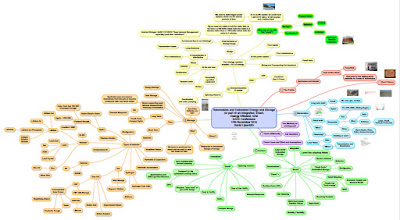
My presentation at the SAEE (South African Energy Efficiency Conference) on 11th November 2015.
Dealing with "dumb" centralised "push" grids vs smart decentralised "pull" grids. Also dealing with energy waste and spinning reserve and what we can do with this.
Friday, November 6, 2015
Has our education system failed us and let to mass overconsumption and pollution?
The educational debate. Someone just asked me to comment on an article about bringing modern education to everyone on the planet via using the internet and home schooling, and this is my response.
Dear Hermann.
An excellent article and thank you for asking me to comment on it.
This article assumes that rural Africans and other Africans without adequate education (definition to be discussed) and also others in the world without access to our historical educational grids, should have access to the same kind of education that we had.
Recently I have been doing a lot of research in "Social Capital" in an African educational system. Last month, I spoke at a conference about this, and next week I am speaking about it at the SAEE (South African Energy Efficiency) conference in Joburg. (See http://mypowerstation-sa.blogspot.co.za/search?q=social+capital)
I don't believe that our earth can continue to sustain the kind of education that we have historically forced on our children. This has led to the mass consumption and pollution that we see today.
Instead, I see that cheap and reliable renewable energy + cheap and reliable internet bandwidth from anywhere on the planet + getting people to want to remain in their communities rather than migrate to the cities (because they can access the cities from their communities) + an educational alternative which encourages rural town development and rural wealth creation by using permaculture principles enhanced into bringing people into the internet and energy internet age, will solve our mass education problems. I see a return to city states, but enhanced to the point where everyone is "rich", ie has access to the kinds of amenities that we have today, ie fresh potable water, hot water, flushing toilets, energy efficient housing and buildings, readily available clothing and quality, organic, food, electricity, the internet, and educational resources that enhance their current lifestyles, rather than trying to make them like us.
In my opinion, our system is failing us, as it moves more and more resources to centrally controlled units (clouds), and instead of making us interdependent, is creating a culture of dependence which is getting worse and worse.
We need to test our assumptions and ensure that we want the best for other people, and not try to make other people like us.
Regards
David.
Dear Hermann.
An excellent article and thank you for asking me to comment on it.
This article assumes that rural Africans and other Africans without adequate education (definition to be discussed) and also others in the world without access to our historical educational grids, should have access to the same kind of education that we had.
Recently I have been doing a lot of research in "Social Capital" in an African educational system. Last month, I spoke at a conference about this, and next week I am speaking about it at the SAEE (South African Energy Efficiency) conference in Joburg. (See http://mypowerstation-sa.blogspot.co.za/search?q=social+capital)
I don't believe that our earth can continue to sustain the kind of education that we have historically forced on our children. This has led to the mass consumption and pollution that we see today.
Instead, I see that cheap and reliable renewable energy + cheap and reliable internet bandwidth from anywhere on the planet + getting people to want to remain in their communities rather than migrate to the cities (because they can access the cities from their communities) + an educational alternative which encourages rural town development and rural wealth creation by using permaculture principles enhanced into bringing people into the internet and energy internet age, will solve our mass education problems. I see a return to city states, but enhanced to the point where everyone is "rich", ie has access to the kinds of amenities that we have today, ie fresh potable water, hot water, flushing toilets, energy efficient housing and buildings, readily available clothing and quality, organic, food, electricity, the internet, and educational resources that enhance their current lifestyles, rather than trying to make them like us.
In my opinion, our system is failing us, as it moves more and more resources to centrally controlled units (clouds), and instead of making us interdependent, is creating a culture of dependence which is getting worse and worse.
We need to test our assumptions and ensure that we want the best for other people, and not try to make other people like us.
Regards
David.
Monday, October 5, 2015
David's Homeowner Power Station Conference

So after seven years of preparation, my very first self-organised conference is Live and you can buy tickets.
"David's Homeowner Power Station Conference". With a twist. You decide its content. I make topic recommendations and I start the conference with a 40 minute keynote speech, titled, "Load Shedding and What we can do about it".
David's Homeowner Power Station Conference: preparing for a world without jobs.
We all have our own power stations. We have power. We have internal power which makes us who we are. And we can also generate power and save power. And energy. Hence "my power station". Say it aloud. "My Power Station". :) Feels good, doesn't it.
The conference is at the Belmont Square Conference Centre in Rondebosch, Cape Town, on the 28th November 2015. I'd like to thank the Belmont Square team for helping me to make this conference a reality and for their help and flexibility. And I'd like to thank the Webtickets team for helping me with the set up and for not complaining about the numerous changes that were needed as I learnt how their platform works.

We also have potential venues in Paarl and other parts of South Africa and if you'd prefer to attend elsewhere, in South Africa, Africa or anywhere, please let me know?
Registration is from 8am and the conference is from 9am to 5pm. Breakfast and lunch will be provided and teas, coffees, biscuits and fruit will be available all day.
There will also be special presents such as bags, USB sticks, and some special guests have asked to attend. Note that in order to cover our costs the bags and USB sticks will probably be sent to participants after the conference, but watch this space. Any sponsors are welcome.
The basic idea behind this conference is that I attend very many conferences and due to my knowledge in energy and my contribution to renewable energy in South Africa, I am given tickets to the conferences and I speak at many of them. Some of these conferences cost R7,500 per day.

I want to transfer this knowledge to homeowners and small business owners, who have limited time and limited resources. I am very good at taking complex, technical issues and explaining them in plain English. And I intend to help you along your path to developing your own power station and retiring sooner than expected.
I have chosen to make this conference especially for home owners and small business owners and to charge only R750 for the day. To cover the conference costs, pay myself, and make a small profit, so that I can organise the next conference(s), and so that I can devote more time to the Research and Development I do in Renewable Energy and Energy Storage (batteries).
Every participant will be able to ask one question. Some of the questions will be answered at the conference and all will be answered on my BLOG. We will have discussions at the conference and perhaps we will change ourselves, and maybe even South Africa and Africa, and who knows, maybe the world.
Early bird R550 for the day. Early bird available until 7th November.
After that the full R750 fee is applicable.
The early bird fee allows us to get everything up and running, pay deposits, get the handouts, make sure the food is provided, etc.
Including VAT and you get an invoice made out to you or your company. We are a PTY Ltd company and we are VAT registered and our company started in November 1994, so we have been around and we have credibility.
Buy Tickets at Webtickets or email me if you want to pay by internet transfer or if you need an invoice first.
Topics to follow.
Thanks to my brother Steve Freedom for the logo and photographic manipulation work.

Sunday, August 2, 2015
Germany paid for the world to have cheap Photovoltaic Electricity!
In reply to the following question:

Because in the 1980's Germany realised that coal, oil, gas and nuclear energy would be unaffordable by 2020 and they decided to do something about it.
In 1991, they implemented Feed In Tariffs (FITs). At the time the FITs would have been R12 if they had been in the City of Cape Town, whereas Cape Town electricity was 10 cents per kWh in those days.
Germany saw the big picture and created the word's biggest supplier and experts of Renewable Energy equipment. Germany essentially paid for the rest of the world to have cheap electricity!
Germany decided to get to 20 by 2020, ie 20% Renewable Energy by 2020. They got there in 2013 and change 20 to 30 by 2020. Last year they got to Grid Parity with Grid Tie PV and started incentivising Battery Based Systems.
See attached graph which shows the graphs over the past few years:

See attached graph which shows the graphs over the past few years:

Saturday, July 25, 2015
"Cost reflective electricity tariffs"
"Cost reflective tariffs" in an environment where costs are 3 times higher than they should be:-
The SADC ministers met yesterday and spoke about "cost reflective tariffs". For Medupi this is R1.20 per kWh and for Nuclear R1.60 per kWh.
These are cost prices to Eskom. So homeowners can expect another 100% increases in electricity prices to achieve 'cost reflectivity'.
But: renewable energy is already at R1.50 for homeowners who are paying R2.14 in City of Cape Town!
A friend of mine did 40 renewable energy installs in Cape Town in the past three months. All systems so that people and businesses don't have load shedding.
And we are now very close to grid parity with batteries.
My thesis is that the SADC utilities must work with what I call Rooftop Owner IPPs to solve our energy and unemployment & water & cost of living & pollution crises.
Any other form of intervention is a waste of time and is driving customers away.
Note that I told a this to Ian Nielsen in Nov 2013, and even though he is the CFO of the City of Cape Town, he said that tariffs are the problem.
The sad truth is the SADC governments don't want to work with their electorate, and soon we wont need governments anyway as we take responsibility for ourselves and move back to city states.
Sunday, June 14, 2015
Should South Africa really have 426 GW of electricity?
426 GW?
33.6GW?
South Africa has about 42 GW of electricity on the grid, but as we all know Eskom can only provide about 75% to 80% of this on a regular basis, so lets say 33.6 GW is available. Eskom and the government say that South Africa's demand is decreasing, but if someone put up your prices from 57 cents per kWh to R1.96 per kWh between 2008 and 2015, you would probably also try to find ways of reducing your consumption! Or perhaps using other cheaper sources of electricity?
With inflation at 5% over this time, prices should be 80 cents per kWh, not R1.96 per kWh. Note that the R1.96 per kWh is the price in the City of Cape Town for a homeowner using 1,200 kWh per month. Prices include VAT.
Worldwide electricity growth is 4% per annum, so over 20 years, 42 GW should have become 84 GW.
But in South Africa, our government has a policy of ensuring that everyone has access to electricity. So if you take someone with no electricity and you give them, or they buy, a kettle and a washing machine and an iron and a hob and an oven and a vacuum cleaner then electricity growth is closer to 6% (or more) and electricity availability should already be closer to 142 GW.
Now the average American uses 3 times as much electricity as the average South African, so this 142 GW should be 426 GW.
Even if I'm a little bit wrong and our inherent demand is actually 100 GW, there is no way that Eskom can ever keep up with build and supply, even if they do their R2,300,000,000,000 (R2.3 trillion) build. And as we know Eskom are always at least 100% over budget and at least 100% behind on time when they build or fix power stations, so we can work on never having the kind of electrical resources we should have.
So why not turn Eskom in the Independent Market System Operator (ISMO), allowing it to continue running its power stations and allowing everyone to become a PROSUMER, someone who produces and consumes electricity and people who can export electricity into the grid when the electricity is needed. In fact private people can buy and sell electricity from and to each other across a nationally owned electricity grid.
(For more about Prosumers and what will happen in our 21st Century economy, read The Zero Marginal Cost Society by Jeremy Rifkin: http://www.thezeromarginalcostsociety.com/)
(The South African government started discussing the ISMO bill back in 1998 when the government created the Energy White Paper of 1998).
(Grids: planes fly across countries using the airway grids; private trains use nationally owned railways in the UK and Europe; cell phone operators use fixed cable grids owned by other multinationals and governments; in Germany, one can buy and sell electricity across the national electricity grid).
For this to happen though, we need 1 million people to support this notion. I thought that if I created a petition, it would help, but it hasn't helped. Sign it now: https://secure.avaaz.org/en/petition/South_African_Government_Level_the_Playing_fields_in_the_Electricity_Industry/?miJGmbb Please.
And there are 600 million people in Africa without electricity. Can you see the potential of finding a sustainable electricity source that doesn't effect the environment?
So what to do? A few years ago I decided that instead of focussing on installations where I could influence 100 people a year, that I would do public speaking where I can influence 100 people at a time, and so that is what I am doing. If you need my help to speak to your company, your community, your board of directors, or to you and your friends, please let me know.
The solutions are at hand. The money is available. The technology is available and a lot cheaper than it was 10 years ago.
IT'S A SOCIAL PROBLEM. We believe that we are free if we are separate, but we are free if we are together, yet with independent thinking and free speech. If only we would work together to solve our really big problems. We have lots of sociologists in South Africa and they need to come to the party.
Looking forward to hearing from you and to creating the kind of environment we can, where everyone has a job and everyone has holidays and everyone is safe and everyone is saved.
PS: Where is the missing 392 GW? (426 - 33.8)
South Africa exports its coal, bauxite, iron ore, gold, platinum, uranium, diamonds, chromium, etc, and other countries use these resources to make electricity and goods, which we then import.
Everything, including the jobs and most of the profits, happens overseas using our resources. And we export things for a pittance and then import them expensively. So our balance of payments is poor and our exchange rate is terrible, when we should actually have one of the strongest exchange rates in the world.
An energy resource: https://en.wikipedia.org/wiki/World_energy_consumption
33.6GW?
South Africa has about 42 GW of electricity on the grid, but as we all know Eskom can only provide about 75% to 80% of this on a regular basis, so lets say 33.6 GW is available. Eskom and the government say that South Africa's demand is decreasing, but if someone put up your prices from 57 cents per kWh to R1.96 per kWh between 2008 and 2015, you would probably also try to find ways of reducing your consumption! Or perhaps using other cheaper sources of electricity?
With inflation at 5% over this time, prices should be 80 cents per kWh, not R1.96 per kWh. Note that the R1.96 per kWh is the price in the City of Cape Town for a homeowner using 1,200 kWh per month. Prices include VAT.
Worldwide electricity growth is 4% per annum, so over 20 years, 42 GW should have become 84 GW.
But in South Africa, our government has a policy of ensuring that everyone has access to electricity. So if you take someone with no electricity and you give them, or they buy, a kettle and a washing machine and an iron and a hob and an oven and a vacuum cleaner then electricity growth is closer to 6% (or more) and electricity availability should already be closer to 142 GW.
Now the average American uses 3 times as much electricity as the average South African, so this 142 GW should be 426 GW.
Even if I'm a little bit wrong and our inherent demand is actually 100 GW, there is no way that Eskom can ever keep up with build and supply, even if they do their R2,300,000,000,000 (R2.3 trillion) build. And as we know Eskom are always at least 100% over budget and at least 100% behind on time when they build or fix power stations, so we can work on never having the kind of electrical resources we should have.
So why not turn Eskom in the Independent Market System Operator (ISMO), allowing it to continue running its power stations and allowing everyone to become a PROSUMER, someone who produces and consumes electricity and people who can export electricity into the grid when the electricity is needed. In fact private people can buy and sell electricity from and to each other across a nationally owned electricity grid.
(For more about Prosumers and what will happen in our 21st Century economy, read The Zero Marginal Cost Society by Jeremy Rifkin: http://www.thezeromarginalcostsociety.com/)
(The South African government started discussing the ISMO bill back in 1998 when the government created the Energy White Paper of 1998).
(Grids: planes fly across countries using the airway grids; private trains use nationally owned railways in the UK and Europe; cell phone operators use fixed cable grids owned by other multinationals and governments; in Germany, one can buy and sell electricity across the national electricity grid).
For this to happen though, we need 1 million people to support this notion. I thought that if I created a petition, it would help, but it hasn't helped. Sign it now: https://secure.avaaz.org/en/petition/South_African_Government_Level_the_Playing_fields_in_the_Electricity_Industry/?miJGmbb Please.
And there are 600 million people in Africa without electricity. Can you see the potential of finding a sustainable electricity source that doesn't effect the environment?
So what to do? A few years ago I decided that instead of focussing on installations where I could influence 100 people a year, that I would do public speaking where I can influence 100 people at a time, and so that is what I am doing. If you need my help to speak to your company, your community, your board of directors, or to you and your friends, please let me know.
The solutions are at hand. The money is available. The technology is available and a lot cheaper than it was 10 years ago.
IT'S A SOCIAL PROBLEM. We believe that we are free if we are separate, but we are free if we are together, yet with independent thinking and free speech. If only we would work together to solve our really big problems. We have lots of sociologists in South Africa and they need to come to the party.
Looking forward to hearing from you and to creating the kind of environment we can, where everyone has a job and everyone has holidays and everyone is safe and everyone is saved.
PS: Where is the missing 392 GW? (426 - 33.8)
South Africa exports its coal, bauxite, iron ore, gold, platinum, uranium, diamonds, chromium, etc, and other countries use these resources to make electricity and goods, which we then import.
Everything, including the jobs and most of the profits, happens overseas using our resources. And we export things for a pittance and then import them expensively. So our balance of payments is poor and our exchange rate is terrible, when we should actually have one of the strongest exchange rates in the world.
An energy resource: https://en.wikipedia.org/wiki/World_energy_consumption
Saturday, June 13, 2015
Buckets of Sun - a short story about energy for schools and learners and adults
Some weekend reading: enjoy:
By David Lipschitz and Dorian Haarhoff, © May 2012
Once there was an island just off the coast of South Africa not far from Robben Island. It was roughly the same size. The place had no name. There were 50 houses on it. The houses had no names either.
Power came from the mainland. Islanders referred to this as The Mains. Once a month a man called Bill came from the Mains dressed in a coal black suit. He knocked on every door to collect the monthly electricity and water money.
People grumbled. Mr Expense from no 6 peered at Bill through his glasses with fossil frames (everyone on the island wore them) “this month we’ve even stopped bathing. We only take showers. But the bill goes up.”
Bill shrugged his shoulders “You ain’t seen nothing yet” he muttered as he dropped three of Mr Expense’s R500 notes – yes, the Reserve Bank now issued R500 notes - into his collection box. The residents grumbled but did nothing.
Then one morning life changed for the islanders. It happened to be a holiday - Freedom Day 27 April. The sun was shining brightly as it did most days in this part of the world.
It was Suna from no 13 - the 13 year old, who came running with the news. She panted “There is a man with fiery red hair standing on the beach. He’s wearing green goggles. He has a sunflower in his hat. He is surrounded by buckets. Lots of buckets. You have to come and see.” She ran from door to door. Her dog, Sunbeam, ran with her. She called him Sunbeam for his coat was golden.
Somebody from each house made their way onto the beach. Sure enough there was a man in green goggles standing surrounded by 50 buckets. Each bucket had the number of one of the houses on it. “Come and get your bucket of Sun” he called.
Sunbeam ran up to the man and wagged its tail.
“Who are you?” a few of the women asked.
“You can call me a Sungoma” the man smiled “and I come from up there.” He pointed towards the sun.
Suna cried out “I wrote a poem about the sun’s smile.” She recited it by heart.
“The Sun god beams and smiles
then shakes his fiery hair.
Here’s energy for Africa
as I’ve got light to spare.”
“Ah yes. well done. That’s the generous old sun for you.” Sungoma clapped his hands.
“What is this all about?” muttered Mr Slowchange from number 27 suspiciously.
“It’s simple,” said the Sungoma. “You take the bucket of sun and you pour it onto your roof into a special contraption. And now you have sun power for as long as your house stands.”
“How much does it cost?” grumbled Mrs TightBudget from no 33.
“Costs the same as you pay to Bill from the Mains every month.”
“So why change?”
“Ah the difference is the this cost doesn’t go up and up every month like a helicopter. It stays the same.” Sungoma held up five green fingers and ticked them off one by one. “One we produce electricity. Two we save electricity. Three we save water. Four we save money. Five we save the planet.”
“So,” said Grandpa Thinka, “We are simply being more efficient? We work with nature rather than against nature?”
Sungoma did a dance. “You’ve got it you’ve got it”, he sang.
Addem, the accountant, spoke up. “I’ve worked it out. Energy Efficiency is the first step. We call that efficiency Negawatts. Once we've done this, we make electricity for the balance of our electricity needs.”
“Sungoma slapped him on the shoulder “Yes, yes.”
Grandpa Thinka then asked, “So how do we save? We have to install some saving things right?”
“If all 50 get a sun bucket, I can buy what we need at a rock bottom prices … and wait for it ….the price is thrown in to the monthly cost. And you could all get a tank.”
“What kind of tank?” asked Colonel Fighta, thinking of his army days.
“He means a water tank, Uncle”, explained Suna.
At that point Sungoma handed everybody a pair of green goggles. “Here, take off your old specs. Put these on.” The islanders put them on and suddenly the world looked different. It was full of possibility. “When you wear these”, explained Sungoma, “all the plugs and appliances in your home that chew electricity and gulp water will show up as luminous green.”
“What’s the catch?”, shouted Sir Spicious.
One of the residents, Mrs Ena Sight, suddenly saw the light. “The only catch is if you keep paying coal man Bill more and more every month. Water goes up and up like a fountain except it never comes down. Give me a bucket.”
The couple at no 3 squeezed each other’s hands. They had not done that for years. “We’re signing up too.” They had a mielie farm.
Old Mrs Smiley, Suna’s grandmother began to sing happily “You are my sunshine my only sunshine.”
Sir Spicious asked “Can we trust this man?”
Just then Suna’s dog, Sunbeam, went up to the Sungoma and licked his hand. Sunbeam then rolled over and exposed his belly to the sun’s rays.
“I trust Mr Sungoma”, announced Suna.” Her granny nodded “Children and dogs know things.”
Another resident wanted to know, “How will we organise this? I worked for the Mooncipality and that was chaos.”
“We already have a Neighbour Watch. So we organise a small group that looks after our sun interests” smiled Con Nection from no 41.
“We can call it the Neighbour Watts” yelled Suna. Sunbeam wagged his tail.
So the people took a bucket of sun each. Two neighbours started chatting to each other as they walked away “I have family from the Mains to stay this month. My son and daughter-in-law and their four children. I’m worried I won’t have enough sun power.”
One bright neighbour looked at her through her green goggles “Never mind. I’ll have too much sun this month so you can come with your bucket and borrow some.”
People began to find names for their houses. Sundance, Sundeck, Sunergy, Sunchronicity. When the end of the next month came the people on the Mains grumbled while the green goggled islanders smiled and turned their faces to the sun. After a few months they didn’t need goggles at all so they took them off. Their eyes had adjusted to the green light and insight.
Tourists came from the Mains to see why the islanders looked so happy and had money for holidays. Suna was their tour guide “Now instead of sums we do suns” Suna explained, “and you can create your own sun island just like ours. Just ask Sungoma to bring his buckets. ”
The community met and elected their Neighbour Watts. They named their island Madebasun and they saved happily ever after.
Buckets of Sun
By David Lipschitz and Dorian Haarhoff, © May 2012
Once there was an island just off the coast of South Africa not far from Robben Island. It was roughly the same size. The place had no name. There were 50 houses on it. The houses had no names either.
Power came from the mainland. Islanders referred to this as The Mains. Once a month a man called Bill came from the Mains dressed in a coal black suit. He knocked on every door to collect the monthly electricity and water money.
People grumbled. Mr Expense from no 6 peered at Bill through his glasses with fossil frames (everyone on the island wore them) “this month we’ve even stopped bathing. We only take showers. But the bill goes up.”
Bill shrugged his shoulders “You ain’t seen nothing yet” he muttered as he dropped three of Mr Expense’s R500 notes – yes, the Reserve Bank now issued R500 notes - into his collection box. The residents grumbled but did nothing.
Then one morning life changed for the islanders. It happened to be a holiday - Freedom Day 27 April. The sun was shining brightly as it did most days in this part of the world.
It was Suna from no 13 - the 13 year old, who came running with the news. She panted “There is a man with fiery red hair standing on the beach. He’s wearing green goggles. He has a sunflower in his hat. He is surrounded by buckets. Lots of buckets. You have to come and see.” She ran from door to door. Her dog, Sunbeam, ran with her. She called him Sunbeam for his coat was golden.
Somebody from each house made their way onto the beach. Sure enough there was a man in green goggles standing surrounded by 50 buckets. Each bucket had the number of one of the houses on it. “Come and get your bucket of Sun” he called.
Sunbeam ran up to the man and wagged its tail.
“Who are you?” a few of the women asked.
“You can call me a Sungoma” the man smiled “and I come from up there.” He pointed towards the sun.
Suna cried out “I wrote a poem about the sun’s smile.” She recited it by heart.
“The Sun god beams and smiles
then shakes his fiery hair.
Here’s energy for Africa
as I’ve got light to spare.”
“Ah yes. well done. That’s the generous old sun for you.” Sungoma clapped his hands.
“What is this all about?” muttered Mr Slowchange from number 27 suspiciously.
“It’s simple,” said the Sungoma. “You take the bucket of sun and you pour it onto your roof into a special contraption. And now you have sun power for as long as your house stands.”
“How much does it cost?” grumbled Mrs TightBudget from no 33.
“Costs the same as you pay to Bill from the Mains every month.”
“So why change?”
“Ah the difference is the this cost doesn’t go up and up every month like a helicopter. It stays the same.” Sungoma held up five green fingers and ticked them off one by one. “One we produce electricity. Two we save electricity. Three we save water. Four we save money. Five we save the planet.”
“So,” said Grandpa Thinka, “We are simply being more efficient? We work with nature rather than against nature?”
Sungoma did a dance. “You’ve got it you’ve got it”, he sang.
Addem, the accountant, spoke up. “I’ve worked it out. Energy Efficiency is the first step. We call that efficiency Negawatts. Once we've done this, we make electricity for the balance of our electricity needs.”
“Sungoma slapped him on the shoulder “Yes, yes.”
Grandpa Thinka then asked, “So how do we save? We have to install some saving things right?”
“If all 50 get a sun bucket, I can buy what we need at a rock bottom prices … and wait for it ….the price is thrown in to the monthly cost. And you could all get a tank.”
“What kind of tank?” asked Colonel Fighta, thinking of his army days.
“He means a water tank, Uncle”, explained Suna.
At that point Sungoma handed everybody a pair of green goggles. “Here, take off your old specs. Put these on.” The islanders put them on and suddenly the world looked different. It was full of possibility. “When you wear these”, explained Sungoma, “all the plugs and appliances in your home that chew electricity and gulp water will show up as luminous green.”
“What’s the catch?”, shouted Sir Spicious.
One of the residents, Mrs Ena Sight, suddenly saw the light. “The only catch is if you keep paying coal man Bill more and more every month. Water goes up and up like a fountain except it never comes down. Give me a bucket.”
The couple at no 3 squeezed each other’s hands. They had not done that for years. “We’re signing up too.” They had a mielie farm.
Old Mrs Smiley, Suna’s grandmother began to sing happily “You are my sunshine my only sunshine.”
Sir Spicious asked “Can we trust this man?”
Just then Suna’s dog, Sunbeam, went up to the Sungoma and licked his hand. Sunbeam then rolled over and exposed his belly to the sun’s rays.
“I trust Mr Sungoma”, announced Suna.” Her granny nodded “Children and dogs know things.”
Another resident wanted to know, “How will we organise this? I worked for the Mooncipality and that was chaos.”
“We already have a Neighbour Watch. So we organise a small group that looks after our sun interests” smiled Con Nection from no 41.
“We can call it the Neighbour Watts” yelled Suna. Sunbeam wagged his tail.
So the people took a bucket of sun each. Two neighbours started chatting to each other as they walked away “I have family from the Mains to stay this month. My son and daughter-in-law and their four children. I’m worried I won’t have enough sun power.”
One bright neighbour looked at her through her green goggles “Never mind. I’ll have too much sun this month so you can come with your bucket and borrow some.”
People began to find names for their houses. Sundance, Sundeck, Sunergy, Sunchronicity. When the end of the next month came the people on the Mains grumbled while the green goggled islanders smiled and turned their faces to the sun. After a few months they didn’t need goggles at all so they took them off. Their eyes had adjusted to the green light and insight.
Tourists came from the Mains to see why the islanders looked so happy and had money for holidays. Suna was their tour guide “Now instead of sums we do suns” Suna explained, “and you can create your own sun island just like ours. Just ask Sungoma to bring his buckets. ”
The community met and elected their Neighbour Watts. They named their island Madebasun and they saved happily ever after.
Saturday, May 23, 2015
The Mercedes on my Roof
Do you have a Mercedes on your roof?
I do!
Actually its not a Mercedes. It's a Renewable Energy System and part of it is on my roof and part of it is in my Garage.

I bought it in late 2008 and it was all installed and running by April 2009. A friend of mine and I installed it!
Everybody, except my wife, said I was crazy. Why would anyone want to buy an electricity generation system rather than buying a Mercedes? I had even just test driven the new shape Mercedes in 2008 and a friend asked me when I was going to buy it.
As it was I spent R200,000 on the physical equipment and another R100,000 on a one month business trip to the USA, where I learnt about Grid Tie Photovoltaics (PV), wrote the NABCEP (North American Board of Certified Energy Practitioners) Entry Level exam and attended conferences, in Phoenix Arizona, and in Las Vegas, Nevada.
Total R300,000, the cost of my new Mercedes.
Today the R200,000 component is about R70,000 and the education is priceless.
By the time I went to the USA in February 2009, I had already put over 1,000 hours into R&D (research and development) re learning about my first renewable energy system.
And every time I arrived in my garage after that, in my Renault Clio, which is now 14 years old, I saw my Mercedes on my wall and on my roof.
Load shedding has effected everyone I know, except us. Lots of people I know have recently done installs and they are getting to be like us now, and we are so welcoming of them. Thank you for joining this retirement party.
In my view, one is retired when one doesn't have any expenses. By 2008, Mirjana and I had spent 9 years working on our retirement plan and I only had to work for 8 days a month to pay all our expenses. One day we will be back there.
Back in 2009, everyone was asking me how long this system was going to pay off. We worked out that it was costing us about R5 per kWh, when City of Cape Town electricity was only costing us 50 cents per kWh. Mirjana said it would take 20 years to pay it off.
In hindsight, I realised that we paid off this "car" off in 5 years, just like we would have paid off the real car. And so from January 2009 till December 2013, we paid off the car, and then in January 2014, our electricity bill suddenly dropped from R5,000 per month to R350 per month. If we hadn't done anything, then in January 2014, our electricity bill would have been R1,800 per month.
So in the past 17 months we have saved about R26,000 in electricity costs AND had no load shedding.
We still have a way to go as we want to add a pool cover this year, increase our PV from 1 kW to between 4 and 5 kW, depending on how much we can put on our north facing roof, add another battery bank and add another inverter (or perhaps buy a new model), and then we won't need Eskom.
We will in fact be able to supply electricity 24 hours a day as and when the City or Eskom need it, but in order to do this we want Net Metering and Time of Use Tariffs, otherwise we just don't think its worth exporting any electricity.
At some point in the future we also want to add another 5kW to power our electric car, when we can afford it and when it is affordable for us.
Some of the incredible things that have happened in the past 7 years are:
And so I wish everyone I know another amazingly interesting year. At a recent party, I said that life would be so dull if it was perfect. I look forward to making our world more perfect each day, together with so many amazing people in my life.
If you want to read more: here links to some other places I have written or published things on the 'net:
Here are my web sites and BLOGs:
Work:
http://www.mypowerstation.biz/
http://mypowerstation-sa.blogspot.com
https://mypowerstation.wordpress.com/
http://loadsheddingguru.blogspot.com/
http://loadshedding.guru/
https://www.youtube.com/user/DavidLipschitz
http://www.orbital.co.za/
http://www.slideshare.net/DavidLipschitz
https://za.linkedin.com/in/davidlipschitz
https://www.facebook.com/MyPowerStation
https://www.facebook.com/groups/87529220082/
https://www.facebook.com/NetMeteringSA
https://twitter.com/mypowerstation
https://twitter.com/LoadShedingGuru
Other personal writings can be found here:
http://repairyourworld.blogspot.com/
http://afterthemayancalendar.blogspot.com/
Also:
https://www.facebook.com/david.lipschitz
https://about.me/david.lipschitz
I do!
Actually its not a Mercedes. It's a Renewable Energy System and part of it is on my roof and part of it is in my Garage.

I bought it in late 2008 and it was all installed and running by April 2009. A friend of mine and I installed it!
Everybody, except my wife, said I was crazy. Why would anyone want to buy an electricity generation system rather than buying a Mercedes? I had even just test driven the new shape Mercedes in 2008 and a friend asked me when I was going to buy it.
As it was I spent R200,000 on the physical equipment and another R100,000 on a one month business trip to the USA, where I learnt about Grid Tie Photovoltaics (PV), wrote the NABCEP (North American Board of Certified Energy Practitioners) Entry Level exam and attended conferences, in Phoenix Arizona, and in Las Vegas, Nevada.
Total R300,000, the cost of my new Mercedes.
Today the R200,000 component is about R70,000 and the education is priceless.
By the time I went to the USA in February 2009, I had already put over 1,000 hours into R&D (research and development) re learning about my first renewable energy system.
And every time I arrived in my garage after that, in my Renault Clio, which is now 14 years old, I saw my Mercedes on my wall and on my roof.
Load shedding has effected everyone I know, except us. Lots of people I know have recently done installs and they are getting to be like us now, and we are so welcoming of them. Thank you for joining this retirement party.
In my view, one is retired when one doesn't have any expenses. By 2008, Mirjana and I had spent 9 years working on our retirement plan and I only had to work for 8 days a month to pay all our expenses. One day we will be back there.
Back in 2009, everyone was asking me how long this system was going to pay off. We worked out that it was costing us about R5 per kWh, when City of Cape Town electricity was only costing us 50 cents per kWh. Mirjana said it would take 20 years to pay it off.
In hindsight, I realised that we paid off this "car" off in 5 years, just like we would have paid off the real car. And so from January 2009 till December 2013, we paid off the car, and then in January 2014, our electricity bill suddenly dropped from R5,000 per month to R350 per month. If we hadn't done anything, then in January 2014, our electricity bill would have been R1,800 per month.
So in the past 17 months we have saved about R26,000 in electricity costs AND had no load shedding.
We still have a way to go as we want to add a pool cover this year, increase our PV from 1 kW to between 4 and 5 kW, depending on how much we can put on our north facing roof, add another battery bank and add another inverter (or perhaps buy a new model), and then we won't need Eskom.
We will in fact be able to supply electricity 24 hours a day as and when the City or Eskom need it, but in order to do this we want Net Metering and Time of Use Tariffs, otherwise we just don't think its worth exporting any electricity.
At some point in the future we also want to add another 5kW to power our electric car, when we can afford it and when it is affordable for us.
Some of the incredible things that have happened in the past 7 years are:
- I have a thriving software development business and I truly enjoy making people happy and solving problems and this fits my personality profile. I also love that I can work from anywhere in the world and travel to be with my wife's family every 18 months to two years. As our expenses continue to go down, we want to increase these visits.
- I have become a world renowned expert in Renewable Energy. I wasn't expecting this when I started out. I thought I'd just be an installer, installing systems, but I am in demand at conferences all over the place and I have had negotiations with conference organisers overseas, but nothing materialised yet. Soon or later it will happen.
- As part of this I have attended conferences and / or written letters to newspapers and magazines on behalf of Treasure The Karoo Action Group and the South African Alternative Energy Association and Greater Cape Town Civic Alliance.
- I am also doing battery based system designs and consulting and I refer work to various contractors for doing installations.
- Last year I turned 50. What a milestone it was. My business turned 20 years old last year and I have been married to the woman of my dreams for 17 wonderful, if somewhat turbulent, financially, years. But this is the life of an entrepreneur.
Dawie Roodt in his book, "Tax, Lies and Red Tape", has this to say about entrepreneurs in South Africa: "Besides the taxman, the workforce has also been demanding its pound of flesh, and then some. In fact, South Africa's organised workforce has become so powerful and militant that it has been forcing entrepreneurs to pay employees more and more of the wealth they are trying to create - without offering them anything that resembles an equivalent rise in productivity. In addition, once an entrepreneur has hired a few workers, he or she cannot simply fire them again. Obviously entrepreneurs need workers to succeed in their effort to create wealth; good workers. But red tape from here to eternity prevents them from showing poor performers to the door. Small wonder then that there are so few entrepreneurs in South Africa; theirs is the most exploited occupation in the country.But there are those of us who still believe in South Africa and are still here and still putting as much as we can in every day, paying all the taxes that are demanded of us, whilst at the same time still trying to make things better by offering electricity to the grid, or offering other services, which our government still ignores.
And so I wish everyone I know another amazingly interesting year. At a recent party, I said that life would be so dull if it was perfect. I look forward to making our world more perfect each day, together with so many amazing people in my life.
If you want to read more: here links to some other places I have written or published things on the 'net:
Here are my web sites and BLOGs:
Work:
http://www.mypowerstation.biz/
http://mypowerstation-sa.blogspot.com
https://mypowerstation.wordpress.com/
http://loadsheddingguru.blogspot.com/
http://loadshedding.guru/
https://www.youtube.com/user/DavidLipschitz
http://www.orbital.co.za/
http://www.slideshare.net/DavidLipschitz
https://za.linkedin.com/in/davidlipschitz
https://www.facebook.com/MyPowerStation
https://www.facebook.com/groups/87529220082/
https://www.facebook.com/NetMeteringSA
https://twitter.com/mypowerstation
https://twitter.com/LoadShedingGuru
Other personal writings can be found here:
http://repairyourworld.blogspot.com/
http://afterthemayancalendar.blogspot.com/
Also:
https://www.facebook.com/david.lipschitz
https://about.me/david.lipschitz
Wednesday, March 11, 2015
Change your thinking: Does Solar Electric Renewable Energy really cost more?
People complain about the high cost of Renewable Energy. Here is my answer to two of them.
Hi Willem and Mike. You both need to think about it a different way:
Hi Willem and Mike. You both need to think about it a different way:
- What will your cash flow be with a solar system? If you are paying R2,000 per month now, and you can install a system, without batteries, and it costs you R1,800 per month, then even though this represents R180,000 of capital, you should do it. A grid tie system without batteries can be paid over 20 years at 10% interest rates.
- Lots of people, especially those who work from home, or SMME's, and even the big boys, are installing backup systems, which don't supply their entire needs, but which for about R100,000, give them security of supply during Load Shedding and BTW, also reduce their normal electricity cost.
- In 2008, I decided to spend R200,000 on a backup system for my house instead of buying a new Renault Clio. I therefore initially spent R5,000 per month instead of R600 per month. Over 5 years this R600 would have become R1,800 with increases. Eventually my "car" was paid off (in five years), in December 2013, and in January 2014, my electricity bill dropped to R400 per month, instead of R1,800 per month that it would have been now.
- If the government allowed "rich" people (by rich people I mean taxpayers) to install their own systems before Tax and before VAT, just like IPP's can, then these peoples's battery based systems would already save them money.
- If the government had spent the R300 billion it has spent on Medupi and Kusile, so far, on poor peoples' houses, then it could have made 6 million of these houses into power stations already.
So it's just a matter of changing our thinking. And that is the problem.
Friday, October 17, 2014
Do Wind Turbines Kill Birds?

This is from research that predates 2013.
And new research in October 2014 can be found at Green Car Reports.
Monday, February 24, 2014
Dramatic Slow Down in Solar Electric (Renewable Energy) Training in South Africa
How to dramatically slow down renewable energy in South Africa. Take a qualification which takes a month in the USA and make it 2.5 years in South Africa!!
These are my official comments:
"2.5 years to do something that can be done in one month in the USA.
"I agree that we need inspectors and perhaps this qualification is more suited to inspectors. However, there are many people who are already installing very competent systems in South Africa and some like mine, which meet the USA NEC Article 690 requirements as far as possible."
http://www.record.org.za/news/item/the-summary-of-qualification-content-pv-technician-for-public-comment#comment-30461
These are my official comments:
"2.5 years to do something that can be done in one month in the USA.
"I agree that we need inspectors and perhaps this qualification is more suited to inspectors. However, there are many people who are already installing very competent systems in South Africa and some like mine, which meet the USA NEC Article 690 requirements as far as possible."
http://www.record.org.za/news/item/the-summary-of-qualification-content-pv-technician-for-public-comment#comment-30461
Thursday, February 20, 2014
Harmful Electricity?
This photo is from a sign in a 100 year old house, explaining to the occupants that electricity isn't harmful to your health and that candles, lamps and gas lamps aren't required anymore:

Read the small print at the bottom:
Re-scripted by me:
"The use of Renewable Energy for electricity is in no way harmful to health, nor does it affect the soundness of sleep."
As we know, "Edison Electricity" is extremely harmful to health. Just look at Coal mines, Acid Mine Drainage, Coal Ash accidents, Smog, Smog in Beijing, Nuclear radiation, gas explosions, etc.
I think that 100 years after this sign was fitted, we can finally take the small print at its real meaning. Electricity does not need to be harmful to one's health.
Read the small print at the bottom:
Re-scripted by me:
"The use of Renewable Energy for electricity is in no way harmful to health, nor does it affect the soundness of sleep."
As we know, "Edison Electricity" is extremely harmful to health. Just look at Coal mines, Acid Mine Drainage, Coal Ash accidents, Smog, Smog in Beijing, Nuclear radiation, gas explosions, etc.
I think that 100 years after this sign was fitted, we can finally take the small print at its real meaning. Electricity does not need to be harmful to one's health.
Saturday, February 25, 2012
David Lipschitz on Net Metering 2012-02-22
Attention Messrs Achim Steiner, Adnan Amin and Kandeh Yumkella
Your article in the Business Day is incredibly timeous as this past week I have reinvigorated my campaign regarding Net Metering.
South Africa is in a recession largely because of lack of electricity supply. This can easily and cost effectively be resolved by allowing Net Metering. By July this year, private citizens in Cape Town will be able to make their own electricity cheaper than we can buy it. And I have financial numbers which show that larger companies can already make their own electricity cheaper than they can buy it.
With Net Metering, users of electricity can buy and sell electricity at the same price. For example, if I produce 1 KW and need 2 KW, then I buy 1 KW from the Grid. Effectively, my meter is going slower than normal. And if I produce 2 KW and need 1 KW then I export electricity to the grid and my meter goes backwards at the same speed it goes forwards. This only happens with people who pay for their electricity in arrears and who have the old fashioned disk meters which look like small metal CDs. Prepaid meters either stop working, stop turning, or go forwards when one is exporting to the grid!
The South African Bureau of Standards created a document called NRS 097-2-1:2010 which was adopted by NERSA, the National Energy Regulator of South Africa, in 2011. The technical term for this Grid Integration, Reverse Feed and Net Metering is "Grid Interconnection of Embedded Generation."
It allows for Grid Tie systems up to 100 KW, an artificial limit. I have two clients who are considering buying large roof top net metering systems: one at 700 KW and one at 500 KW. I also have numerous smaller potential clients who want to use Net Metering and know of a number of people who are already reverse feeding the grid. The grid doesn't see them and they are having very little effect. Their excess electricity is simply used by the neighbour.
Eskom and The Cities, including the so called advanced city of Cape Town and the Western Cape's Provincial Administration (PAWC), have not adopted the "Embedded Generation" policies. The three main reasons given are:
- The Grid Tie inverter might reverse feed the grid when the grid is switched off, eg for maintenance, and an electrician working on the line might get electrocuted;
- Eskom and the Cities will lose revenue;
- The grid might become destabilised.
1 was resolved in 1999 with the American UL 1741 standard which was harmonized with IEEE 1547. Any inverter which is listed to the UL 1741 standard may be connected to a utility grid without the need for additional anti-islanding equipment, anywhere in the United States or other countries where UL standards are accepted. A similar acceptance of the IEEE 1547 is happening in Europe. An island is a grid which can run internally, for example inside a building, without exporting electricity to the main grid. Many companies in South Africa already have Generators and when there is Load Shedding, ie enforced power failures because the demand is either too high or the supply too low, these systems "Island" the Generator and its "clients" until the Grid is restored and then there is a process of disconnecting the Island and reconnecting the Grid. These processes happen seamlessly and are installed by Electrical Engineers.
2 would be solved if government would see out of their silos. The opportunities are great if Citizens of the City of Cape Town and other cities could get the government, which owns Eskom, and the Cities to see out of their silos. I believe that the City of Cape Town gets 60% of its Revenue from Electricity Sales and the 150% increase in electricity over the past 5 years has increased this percentage from 40%. The fastest way to get renewable energy adopted is to allow private people and business owners with the required roof space to cover their roofs in Photovoltaic Systems. This will create jobs, reduce unemployment, reduce crime, increase lighting and electricity in Africa, give security of supply, fewer power failures, less chance of load shedding, and help move us away from polluting power stations. In places like Germany, California and China, the more renewable energy that is installed, the faster the economy grows. This is because the bigger base load power would then be available for the organisations needing the bigger loads, for example shopping centres, new housing developments, miners, smelters and other large users of electricity. And more importantly businesses know their electricity price for decades and can plan accordingly; and businesses get security of supply and fewer disruptions caused by electrical systems failure.
3 is a red herring. I understand that Turkey has found that wind farms up to 500 KW actually stabilise the grid. And in South Africa the two new 4.8 GW power stations will massively destabilise the grid when they are switched on and switched off. Switching on or off 1 KW or 500 KW is tiny compared with 4.8 GW, ie 4,800,000 KW. And if South Africa loses the main power lines from Mpumalanga to the Cape, for example in a storm or terrorist activity, then Cape Town could quickly be without 60% of its electricity supply as only 40% of Cape Town's electricity supply comes from our local Koeberg Nuclear Power Station.
I should say that large users of Renewable Energy such as Germany and Belgium notice problems on their grids when the Renewable Energy component reaches 20% of electricity supply, but it has taken these countries 20 years to get to this point, and with Feed In Tariffs. I think South Africa can do it in 10 years, and by then Germany and Belgium will have solved their problems and South Africa will be able to follow their lead. Breaking news: Germany is solving this grid destabilisation problem!!
I would very much like to help you in any way I can. In November 2008, the South African government announced that Feed In Tariffs (FITs) would be in place by March 2009. My company and hundreds of others decided to get ready for this momentous day. Unfortunately this didn't happen. There were FITs but no Power Purchase Agreement. Since approximately 2009, there has been a 2 cent levy (see what it was meant to be for!) on all electricity sold in place to pay for the FITs and my understanding is that there is R15 billion in this fund already. Be that as it may, we don't need FITs in South Africa anymore. We just need the implementation of Net Metering. Interestingly the Standard allows for Time Of Use Tariffs which would incentivise people to install battery systems to supply electricity at peak time whilst producing or buying electricity at off peak time.
And the R15 billion could be used on a first come first served basis to allow private people to install renewable energy systems before VAT and before tax. Businesses can already do this. See http://mypowerstation.co.za/2011/11/26/my-power-station-press-release-26th-november-2011-david-lipschitzs-renewable-energy-jobs-plan/ for more ideas along this theme.
Hence there would be zero drain on the fiscus and massive job and GDP creation on a Continent that will have the biggest consumer base in the world in the next 20 years. We can either supply our own needs or export our electricity requirements to China and the other Asian Tigers who are massively ramping up electricity production and who will end up making everything we need, but who will then end up owning Africa, as large creditors usually end up owning their customers when the customer cannot pay the bill.
The positive possibilities of Net Metering in Africa's biggest economy and in the rest of Africa are mind blowing. Let's work together to make a difference.
I look forward to your reply and to helping make Renewable Energy a reality in South Africa and on the African Continent.
Thursday, June 23, 2011
Net Metering: selling at the same price you pay
It is now more apparent to me than ever before that South Africans must push for Net Metering as the answer to our energy provision problems. Waiting for the first FITs to appear in 2016 is way to long!
See Engineering News Article.
For more on Net Metering see Engineering News Article.
See Engineering News Article.
For more on Net Metering see Engineering News Article.
Tuesday, October 19, 2010
Government caught out
See http://www.engineeringnews.co.za/article/solar-park-not-out-in-the-cold-government-insists-2010-10-18
This just shows what the government is saying in the media (propaganda and window dressing) vs what they strategically think. It's about time that this misalignment is brought out into the open.
This just shows what the government is saying in the media (propaganda and window dressing) vs what they strategically think. It's about time that this misalignment is brought out into the open.
Wednesday, August 18, 2010
Letter to the President of South Africa, The Premier of the Western Cape, the Speaker of Cape Town, and the Mayor
Dear all
Here is an email that a number of people have just asked me to write. I haven't included the attachments. If you want the original, please email me and I'll send you the original.
Solar Greetings
David Lipschitz
To: The Speaker, The Mayor and The Premier
cc'ed to various people who are pleading with me to stay on on the Ward Forum (and Sandi FYI). Also cc'ed to various newspapers as the ward forum is an open platform as stated in its manifesto and governing rules. I have also cc'ed President Jacob Zuma as I feel that the ANC and the DA both have the problems outlined below and I would very much like a resolution on these matters as a concerned Citizen of our beautiful Republic of South Africa.
I sent the email below and the "100817 Ward Forum 4 David Lipschitz Resignation.doc" attachment off yesterday. I told the Ward Forum in an email on the 4th of August that I intend to resign and Sandi requested I do so formally. I have sent off the letter, but can still change my mind. We'll get to that. But please read my letter of resignation dated 17th August 2010 (100817 ...) attached. It is almost a verbatim copy of a letter I wrote to the Milnerton Residents Association on 5th October 2007.
I have been considering my position carefully over the past few months and don't feel that the ward forum adequately meets our (South African citizens) needs. According to the "Making a difference through public participation Ward Forums" document, "Ward Forums are structured channels of communication between sub-councils and the wards."
Furthermore the Ward Forum code of conduct has certain timing limits on how long it can take for a councillor or even the speaker to respond and these limits are continuously being ignored.
- Forum members must at all times advance and act in the interest of the City of Cape Town and their community;- Forum members must not use their position to promote personal or private interest;- Forum members should avoid political conflicts among themselves and must also avoid political conflicts between themselves and the ward councillor.
At the recent workshop of sub council chairperson recommendations for tough disciplinary action was proposed for ward forum members who push political agendas.
Ward forum members must at all times advance and act in the interest of the City of Cape Town and their community and not promote personal or private interest. I am one of the people who honestly and with integrity seeks to uphold these values.
I joined the ward forum about 3 years ago when it was formed because of the "structured channel of communications." I felt that structure would be better than what we had before, ie residents associations that weren't being listened to. But we are yet another cog in a machine which doesn't listen to its people whilst at the same time making it look like they are listening. It is called Greenwashing. I should hasten to add that Constantia, Newlands and Somerset Residents Associates are listened to and one should ask why?
I also sent the following challenge to the world on Facebook requesting that we get renewable energy onto the agenda. Isn't it better to spend R100,000,000,000 on 20GW of energy employing 35,000 people than on 5GW of energy employing 1,000 people and damaging the environment for thousands of years? See http://www.facebook.com/note.php?note_id=143982192292305 I have written to government and Cosatu with this suggestion and have been ignored.
I also wrote to the Premier of the Western Cape in February with a method to allow private people and businesses to create renewable energy systems at no cost to the government. We are even prepared to sell energy to the grid at the same price that the City of Cape Town pays Eskom! Why? Because then our panels and turbines can be 95% efficient, ie 95% of the energy from the solar panels and wind turbines can be used. At the moment, in my house, my efficiency is about 35% with a battery system which doesn't reverse feed the grid. I would probably never feed the grid, but on many days I am generating 800 Watts and only using 400 Watts and the other 400 Watts could be reducing my pool pump cost and therefore demands on the grid.
On Monday night (16th August 2010) I attended a talk by a nuclear expert who said that electricity demand is increasing at 4% per annum. If it is, then we can never catch up if we constantly use old thinking. See PowerPoint attachment. The numbers in the attachment come from Eskom's web site. The reason for so few power failures at the moment is because of the recession.
The PowerPoint attachment contains the challenge we have in the 21st Century; The Seven Crises in our Energy System by Dr Hermann Scheer, member of the German Government, implementor of renewable energy policies and founder of IRENA (see http://www.youtube.com/watch?v=w_KZ01ps6gI); and some graphs showing that we cannot catch up even if we spend a trillion Rand over the next 20 years and mortgage South Africa to outside interests (the new way of waging war!!),
We truly live in the "age of stupid" as Mervyn King said in a meeting at the BOE in Cape Town a few months ago. There are ways that we could dramatically increase employment, dramatically increase food production, dramatically reduce our cost of living, and truly make South Africa great, but we choose to follow "first world principles" instead of tried and tested African traditions.
The Bible says a couple of things that might help us:
1) "Go forth and multiply". At a meeting on Monday night, I asked about 20 people if they had read Genesis Chapter 1 vs 28 and all of them said no. Can any of you please honestly tell me if you have read this sentence? If you have, you will know that this line has been taken out of context because the phrase continues: "Go forth and multiply, and replenish the earth." We have gone forth and multiplied; now we must replenish the earth;
2) "The sins of the fathers will be upon the children to the forth generation." Deuteronomy Chapter 5 vs 9. What this really means from an environmental point of view is that we must consider the forth generation after us in everything we do!
3) Bal Tashchit: There is a Biblical principle that protects trees. We are cutting down trees. Trees are our life. Perhaps that's why people like the Dalai Lama aren't allowed to visit South Africa. http://www.dalailama.com/messages/environment/buddhist-monks-reflections
My friends, I have a definition of Apathy. "Apathetic people can do anything they like because one day the Messiah will come and save them." This might be true. I personally believe that each of us have Messianic properties and that by working together we can bring on a Messianic age with loads of food, loads of people thinking about the environment, loads of health and much less work. In the Jewish Orthodox prayer book, it says that God will revive the Dead. My personal view follows: Dear friends, so many people are "dead" whilst they are alive. They are unconscious, just going to work, making money, buying food on the way home, cooking, watching TV, and then doing the same thing the next day.
We have such an incredible opportunity in South Africa to "revive the dead", to help make the apathetic concerned, to have 100% employment whilst at the same time polluting the earth less and saving money. Let's make this country a land of milk and honey, something that is promised in the Bible and which can happen even in South Africa if we choose to make it so.
On so my friends, I think you can see my values. If you still can't please see my Unashamedly Ethical Certificate at http://issuu.com/mypowerstation/docs/david_lipschitz_unashamedly_ethical_certificate
And so to my demands. Note that all of these are three years old or more and the Ward Forum and Milnerton and other residents associations have spent 100's of hours on each one at a huge personal and community and paper cost.
1) The R27 from Tableview to Milnerton.
The left land was repaired a few years ago, but the repair was worse than the original! I and others requested that the contractor be made to pay for the repairs at his cost. We were told that this lane would be repaired when the IRT is built. The IRT is complete in this section, but the road hasn't been fixed.
2) Equini Centre, The Paddocks, Milnerton.
The developers ignored cracks developing in their neighbours properties. The developers drilled into the aquifer. The developers should be made to pay for this. I believe they have liquidated the company. If this is the case, then company law allows them to be sued in their personal capacity for dereliction of duty;
3) 84 Ascot Road
This business owner has been fined R3,000 for operating a furniture business. Has he paid? See attachment prepared on 4th September 2008.
4) 4 Dordrecht Road
This business owner and his tenant operate a mini repair business. They race their cars at Killarney race track. The owner of the house is Mr Whitehead, a lawyer who I understand represents the city. See attachment written on 19th September 2007 and affidavit written on 19th May 2008. I asked Mr Whitehead if I could build a car repair business next to his house in Newlands. He said he would fight it.
5) Lagoon Views: see attachment from 9th October 2007! Nothing has been done. The late Rob Robertson fought this very hard. He also fought regarding the hotel at the Lagoon Mouth. He knew Helen Zille personally. Hopefully she will remember how hard he fought for the rights of so many;
6) Together with Tableview and Parklands, we live in the fastest growing cities in South Africa and the Southern Hemisphere, taking Milnerton, Tableview and Parklands as cities combining to form Cape Town. We also live right next to the Koeberg Nuclear Power Station. At the time it was built it made sense. We live in a draught area and bringing electricity from the old Eastern Transvaal power stations was seen as strategically problematic. However, Nuclear power doesn't make sense anymore. We wanted our voices to be heard at the Ward Forum meeting on the 5th August 2010, but that meeting was cancelled. It is imperative that our voices are heard and that the new IRP2010 Energy Strategy is implemented before decisions are made regarding Nuclear Energy.
There are cheaper, more effective methods, that will not cost the earth, that will protect the environment, that will give the average African like myself a better life with less crime, give jobs to millions of South Africans and reduce our pollution and waste. If only we are prepared to try. I met Anton Bredell on 8th June 2010. I was hoping that he would understand these matters and be prepared to speak on a platform of the Environment, after all he is the Provincial Minister of Local Government, Environmental Affairs & Development Planning, but I was disappointed. He isn't prepared to step outside party lines!!
Yet the 2003 White Paper on Renewable Energy which sets guidelines is being ignored. It is referred to in the latest Final White Paper that I have attached. The only thing all these laws do is make the consultants rich. We are told that we have the best environmental legislation in the world. But why don't we implement some of this legislation? Is it because it is easier for MP's to sit in parliament creating new laws than getting out amongst communities helping us to save money? In fact, I propose that a number of laws which protect big business at the expense of the common man are scrapped forthwith. We have way to much complicated and conflicting laws in this country. I propose that we start again with a legal system based on African cultural principles which have as their highest goals and ideals: respecting the earth, community and family.
Let's remember our Constitution and the people like Nelson Mandela and Albie Sacks who made it a reality:
Section 24 of the Constitution of the Republic of South Africa, 1996
Everyone has the right to an environment that is not harmful to their health or well-being; and to have the environment protected, for the benefit of present and future generations, through reasonable legislative and other measures that prevent pollution and ecological degradation; promote conservation; and secure ecologically sustainable development and use of natural resources while promoting justifiable economic and social development.
As always, I am at your service as a Citizen of my Beloved Country, South Africa.
Peace on you, my Brothers and Sisters,
Ke Nako, the time is now,
Solar Regards,
David Lipschitz
D a v i d Lipschitz BSc (Honours) MBA
I help you reduce your carbon footprint using:
• Renewable Energy
• Sustainable Business Design
• Information & Communications Technology.
Listen to me on the radio: http://www.youtube.com/watch?v=o3mR-gx4O3A
MyPowerStation's BLOG is at: http://mypowerstation-sa.blogspot.com/
David Lipschitz's BLOG entry at: http://repairyourworld.blogspot.com/
Also find us on Facebook and LinkedIn
Tel: 021 551 9935
Skype: MyPowerStation
Local Fax: 0866 195 382
Web: http://www.mypowerstation.biz
Here is an email that a number of people have just asked me to write. I haven't included the attachments. If you want the original, please email me and I'll send you the original.
Solar Greetings
David Lipschitz
To: The Speaker, The Mayor and The Premier
cc'ed to various people who are pleading with me to stay on on the Ward Forum (and Sandi FYI). Also cc'ed to various newspapers as the ward forum is an open platform as stated in its manifesto and governing rules. I have also cc'ed President Jacob Zuma as I feel that the ANC and the DA both have the problems outlined below and I would very much like a resolution on these matters as a concerned Citizen of our beautiful Republic of South Africa.
I sent the email below and the "100817 Ward Forum 4 David Lipschitz Resignation.doc" attachment off yesterday. I told the Ward Forum in an email on the 4th of August that I intend to resign and Sandi requested I do so formally. I have sent off the letter, but can still change my mind. We'll get to that. But please read my letter of resignation dated 17th August 2010 (100817 ...) attached. It is almost a verbatim copy of a letter I wrote to the Milnerton Residents Association on 5th October 2007.
I have been considering my position carefully over the past few months and don't feel that the ward forum adequately meets our (South African citizens) needs. According to the "Making a difference through public participation Ward Forums" document, "Ward Forums are structured channels of communication between sub-councils and the wards."
Furthermore the Ward Forum code of conduct has certain timing limits on how long it can take for a councillor or even the speaker to respond and these limits are continuously being ignored.
- Forum members must at all times advance and act in the interest of the City of Cape Town and their community;- Forum members must not use their position to promote personal or private interest;- Forum members should avoid political conflicts among themselves and must also avoid political conflicts between themselves and the ward councillor.
At the recent workshop of sub council chairperson recommendations for tough disciplinary action was proposed for ward forum members who push political agendas.
Ward forum members must at all times advance and act in the interest of the City of Cape Town and their community and not promote personal or private interest. I am one of the people who honestly and with integrity seeks to uphold these values.
I joined the ward forum about 3 years ago when it was formed because of the "structured channel of communications." I felt that structure would be better than what we had before, ie residents associations that weren't being listened to. But we are yet another cog in a machine which doesn't listen to its people whilst at the same time making it look like they are listening. It is called Greenwashing. I should hasten to add that Constantia, Newlands and Somerset Residents Associates are listened to and one should ask why?
I also sent the following challenge to the world on Facebook requesting that we get renewable energy onto the agenda. Isn't it better to spend R100,000,000,000 on 20GW of energy employing 35,000 people than on 5GW of energy employing 1,000 people and damaging the environment for thousands of years? See http://www.facebook.com/note.php?note_id=143982192292305 I have written to government and Cosatu with this suggestion and have been ignored.
I also wrote to the Premier of the Western Cape in February with a method to allow private people and businesses to create renewable energy systems at no cost to the government. We are even prepared to sell energy to the grid at the same price that the City of Cape Town pays Eskom! Why? Because then our panels and turbines can be 95% efficient, ie 95% of the energy from the solar panels and wind turbines can be used. At the moment, in my house, my efficiency is about 35% with a battery system which doesn't reverse feed the grid. I would probably never feed the grid, but on many days I am generating 800 Watts and only using 400 Watts and the other 400 Watts could be reducing my pool pump cost and therefore demands on the grid.
On Monday night (16th August 2010) I attended a talk by a nuclear expert who said that electricity demand is increasing at 4% per annum. If it is, then we can never catch up if we constantly use old thinking. See PowerPoint attachment. The numbers in the attachment come from Eskom's web site. The reason for so few power failures at the moment is because of the recession.
The PowerPoint attachment contains the challenge we have in the 21st Century; The Seven Crises in our Energy System by Dr Hermann Scheer, member of the German Government, implementor of renewable energy policies and founder of IRENA (see http://www.youtube.com/watch?v=w_KZ01ps6gI); and some graphs showing that we cannot catch up even if we spend a trillion Rand over the next 20 years and mortgage South Africa to outside interests (the new way of waging war!!),
We truly live in the "age of stupid" as Mervyn King said in a meeting at the BOE in Cape Town a few months ago. There are ways that we could dramatically increase employment, dramatically increase food production, dramatically reduce our cost of living, and truly make South Africa great, but we choose to follow "first world principles" instead of tried and tested African traditions.
The Bible says a couple of things that might help us:
1) "Go forth and multiply". At a meeting on Monday night, I asked about 20 people if they had read Genesis Chapter 1 vs 28 and all of them said no. Can any of you please honestly tell me if you have read this sentence? If you have, you will know that this line has been taken out of context because the phrase continues: "Go forth and multiply, and replenish the earth." We have gone forth and multiplied; now we must replenish the earth;
2) "The sins of the fathers will be upon the children to the forth generation." Deuteronomy Chapter 5 vs 9. What this really means from an environmental point of view is that we must consider the forth generation after us in everything we do!
3) Bal Tashchit: There is a Biblical principle that protects trees. We are cutting down trees. Trees are our life. Perhaps that's why people like the Dalai Lama aren't allowed to visit South Africa. http://www.dalailama.com/messages/environment/buddhist-monks-reflections
My friends, I have a definition of Apathy. "Apathetic people can do anything they like because one day the Messiah will come and save them." This might be true. I personally believe that each of us have Messianic properties and that by working together we can bring on a Messianic age with loads of food, loads of people thinking about the environment, loads of health and much less work. In the Jewish Orthodox prayer book, it says that God will revive the Dead. My personal view follows: Dear friends, so many people are "dead" whilst they are alive. They are unconscious, just going to work, making money, buying food on the way home, cooking, watching TV, and then doing the same thing the next day.
We have such an incredible opportunity in South Africa to "revive the dead", to help make the apathetic concerned, to have 100% employment whilst at the same time polluting the earth less and saving money. Let's make this country a land of milk and honey, something that is promised in the Bible and which can happen even in South Africa if we choose to make it so.
On so my friends, I think you can see my values. If you still can't please see my Unashamedly Ethical Certificate at http://issuu.com/mypowerstation/docs/david_lipschitz_unashamedly_ethical_certificate
And so to my demands. Note that all of these are three years old or more and the Ward Forum and Milnerton and other residents associations have spent 100's of hours on each one at a huge personal and community and paper cost.
1) The R27 from Tableview to Milnerton.
The left land was repaired a few years ago, but the repair was worse than the original! I and others requested that the contractor be made to pay for the repairs at his cost. We were told that this lane would be repaired when the IRT is built. The IRT is complete in this section, but the road hasn't been fixed.
2) Equini Centre, The Paddocks, Milnerton.
The developers ignored cracks developing in their neighbours properties. The developers drilled into the aquifer. The developers should be made to pay for this. I believe they have liquidated the company. If this is the case, then company law allows them to be sued in their personal capacity for dereliction of duty;
3) 84 Ascot Road
This business owner has been fined R3,000 for operating a furniture business. Has he paid? See attachment prepared on 4th September 2008.
4) 4 Dordrecht Road
This business owner and his tenant operate a mini repair business. They race their cars at Killarney race track. The owner of the house is Mr Whitehead, a lawyer who I understand represents the city. See attachment written on 19th September 2007 and affidavit written on 19th May 2008. I asked Mr Whitehead if I could build a car repair business next to his house in Newlands. He said he would fight it.
5) Lagoon Views: see attachment from 9th October 2007! Nothing has been done. The late Rob Robertson fought this very hard. He also fought regarding the hotel at the Lagoon Mouth. He knew Helen Zille personally. Hopefully she will remember how hard he fought for the rights of so many;
6) Together with Tableview and Parklands, we live in the fastest growing cities in South Africa and the Southern Hemisphere, taking Milnerton, Tableview and Parklands as cities combining to form Cape Town. We also live right next to the Koeberg Nuclear Power Station. At the time it was built it made sense. We live in a draught area and bringing electricity from the old Eastern Transvaal power stations was seen as strategically problematic. However, Nuclear power doesn't make sense anymore. We wanted our voices to be heard at the Ward Forum meeting on the 5th August 2010, but that meeting was cancelled. It is imperative that our voices are heard and that the new IRP2010 Energy Strategy is implemented before decisions are made regarding Nuclear Energy.
There are cheaper, more effective methods, that will not cost the earth, that will protect the environment, that will give the average African like myself a better life with less crime, give jobs to millions of South Africans and reduce our pollution and waste. If only we are prepared to try. I met Anton Bredell on 8th June 2010. I was hoping that he would understand these matters and be prepared to speak on a platform of the Environment, after all he is the Provincial Minister of Local Government, Environmental Affairs & Development Planning, but I was disappointed. He isn't prepared to step outside party lines!!
Yet the 2003 White Paper on Renewable Energy which sets guidelines is being ignored. It is referred to in the latest Final White Paper that I have attached. The only thing all these laws do is make the consultants rich. We are told that we have the best environmental legislation in the world. But why don't we implement some of this legislation? Is it because it is easier for MP's to sit in parliament creating new laws than getting out amongst communities helping us to save money? In fact, I propose that a number of laws which protect big business at the expense of the common man are scrapped forthwith. We have way to much complicated and conflicting laws in this country. I propose that we start again with a legal system based on African cultural principles which have as their highest goals and ideals: respecting the earth, community and family.
Let's remember our Constitution and the people like Nelson Mandela and Albie Sacks who made it a reality:
Section 24 of the Constitution of the Republic of South Africa, 1996
Everyone has the right to an environment that is not harmful to their health or well-being; and to have the environment protected, for the benefit of present and future generations, through reasonable legislative and other measures that prevent pollution and ecological degradation; promote conservation; and secure ecologically sustainable development and use of natural resources while promoting justifiable economic and social development.
As always, I am at your service as a Citizen of my Beloved Country, South Africa.
Peace on you, my Brothers and Sisters,
Ke Nako, the time is now,
Solar Regards,
David Lipschitz
D a v i d Lipschitz BSc (Honours) MBA
I help you reduce your carbon footprint using:
• Renewable Energy
• Sustainable Business Design
• Information & Communications Technology.
Listen to me on the radio: http://www.youtube.com/watch?v=o3mR-gx4O3A
MyPowerStation's BLOG is at: http://mypowerstation-sa.blogspot.com/
David Lipschitz's BLOG entry at: http://repairyourworld.blogspot.com/
Also find us on Facebook and LinkedIn
Tel: 021 551 9935
Skype: MyPowerStation
Local Fax: 0866 195 382
Web: http://www.mypowerstation.biz
Subscribe to:
Posts (Atom)